

William Wallace: The True Story of Scotland’s Braveheart
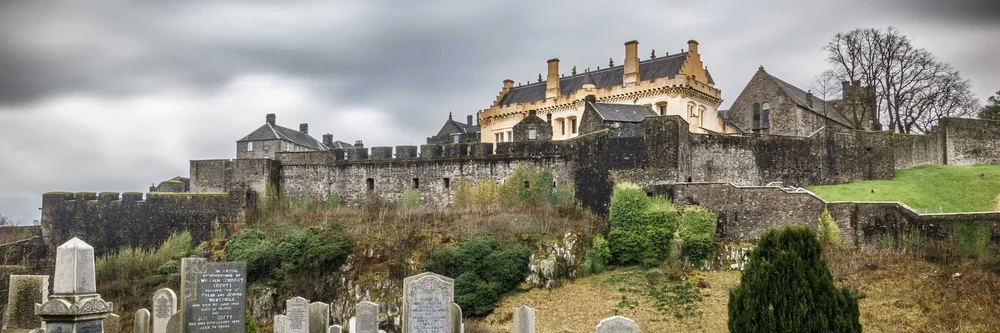
William Wallace: The True Story of Scotland’s Braveheart
When we Scots think of our history, one name comes up before almost any other: William Wallace. He led Scotland’s fight against Edward I of England, won a famous victory at Stirling Bridge and died a traitor’s death in London in 1305. Here’s the real story, what the film Braveheart changed, and the places in Scotland where you can still stand in his footsteps.
- Who was he? A Scottish knight’s son who became the leader of Scotland’s resistance against King Edward I of England in the First War of Scottish Independence.
- Why is he famous? With Andrew Moray, he beat a much larger English army at the Battle of Stirling Bridge on 11 September 1297, and was then made Guardian of Scotland.
- How did he die? He was betrayed and captured near Glasgow in August 1305, taken to London and executed at Smithfield on 23 August 1305.
- Where can you see his story? The National Wallace Monument and the Stirling Bridge battlefield in Stirling, about an hour from Edinburgh or Glasgow.
- BornAbout 1270Probably Elderslie, near Paisley
- Greatest victory11 Sept 1297Battle of Stirling Bridge
- Guardian of Scotland1297 to 1298Ruled in the name of King John Balliol
- Defeated22 July 1298Battle of Falkirk
- Died23 Aug 1305Executed at Smithfield, London, aged about 35
- See his ScotlandStirling day tourFrom £92 pp from Edinburgh
On this page
- Who was William Wallace?
- William Wallace timeline
- Early life and how the war began
- Wallace’s first rebellion: Lanark, 1297
- The Battle of Stirling Bridge (11 September 1297)
- Guardian of Scotland
- The Battle of Falkirk (22 July 1298)
- Capture, trial and execution (1305)
- Braveheart vs history: what the film got wrong
- Where to see William Wallace’s Scotland
- See Wallace’s Stirling on a guided day tour
- William Wallace FAQs
- More Scottish history
Who was William Wallace?
William Wallace was a Scottish knight’s son who, for about a year and a half, led Scotland’s fight to throw off English rule. He wasn’t a king or a great lord. What made him extraordinary was that he kept fighting when most of Scotland’s nobles had given in, and that he beat an English army in open battle when almost nobody thought it could be done.
He was, in every sense, the very essence of a brave heart. Funnily enough, in Scottish tradition that name belonged to someone else: Robert the Bruce, whose heart was carried into battle after his death (more on him in our Robert the Bruce story). The 1995 film gave the name to Wallace, and it has stuck to him ever since.
We know surprisingly little about Wallace for certain. Much of the popular story comes from The Wallace, a long poem written by a minstrel known as Blind Harry around 1477, more than 170 years after Wallace died. Where the records and the legend differ, we’ll tell you.
William Wallace timeline
| Date | What happened |
|---|---|
| About 1270 | Wallace is born, probably at Elderslie near Paisley. Some historians argue for Ellerslie in Ayrshire. |
| 1286 to 1290 | King Alexander III dies, then his heir, the young Margaret, Maid of Norway, dies on the way to Scotland. Scotland has no monarch. |
| 1292 | Edward I of England, asked to judge between the rival claimants, picks John Balliol as king, then treats him as a puppet. |
| 1296 | Scotland allies with France. Edward invades, sacks Berwick, removes Balliol and takes the Stone of Destiny to London. |
| May 1297 | Wallace kills William de Heselrig, the English sheriff of Lanark. It’s his first recorded act of rebellion. |
| 11 Sept 1297 | Wallace and Andrew Moray destroy an English army at the Battle of Stirling Bridge. |
| Late 1297 | Wallace is knighted and made Guardian of Scotland. Moray dies of his wounds. |
| 22 July 1298 | Edward I defeats Wallace at the Battle of Falkirk. Wallace resigns as Guardian. |
| About 1299 to 1303 | Wallace travels to France, and possibly Rome, looking for support for Scotland. |
| 5 Aug 1305 | He’s betrayed and captured at Robroyston, near Glasgow. |
| 23 Aug 1305 | After a show trial at Westminster Hall, he is executed at Smithfield in London. |
| 1869 | The National Wallace Monument opens on the Abbey Craig above Stirling. |
| 1995 | Mel Gibson’s Braveheart makes Wallace famous around the world. |
Early life and how the war began
Wallace was born around 1270, most likely at Elderslie in Renfrewshire, where a memorial stands today. His father was a minor landowner, so Wallace wasn’t the peasant farmer of the film. As a landowner’s son he would have been trained to fight on horseback.
He grew up in a peaceful Scotland under King Alexander III. That peace ended in 1286, when Alexander was killed after his horse fell from a cliff on a stormy night. His heir, his three-year-old granddaughter Margaret, Maid of Norway, died in Orkney in 1290 on her way to Scotland. With no clear heir, thirteen people claimed the throne, and the Scottish nobles asked Edward I of England to decide between them.
Edward agreed, but only once the claimants accepted him as their overlord. He chose John Balliol, then undermined him at every turn. When the Scots signed a treaty with France in 1295 (the start of the Auld Alliance), Edward invaded. In 1296 he sacked Berwick, beat the Scots at Dunbar, stripped Balliol of his crown and carried the Stone of Destiny off to Westminster. Scotland was run by English officials. That’s the Scotland Wallace rose up in.
Wallace’s first rebellion: Lanark, 1297
Wallace’s first recorded act was killing William de Heselrig, the English sheriff of Lanark, in May 1297. Nobody knows exactly why. Blind Harry says Heselrig had murdered Wallace’s wife, Marion Braidfute, and that Wallace took his revenge. It’s a powerful story, but there’s no record from the time that Marion existed.
Whatever the reason, Wallace’s revenge didn’t stop there. Over that summer he led raids across central Scotland, and at the same time Andrew Moray led a rising in the north. Many Scottish nobles surrendered to the English at Irvine in July 1297. Wallace and Moray kept fighting, and by the end of the summer they had joined forces.
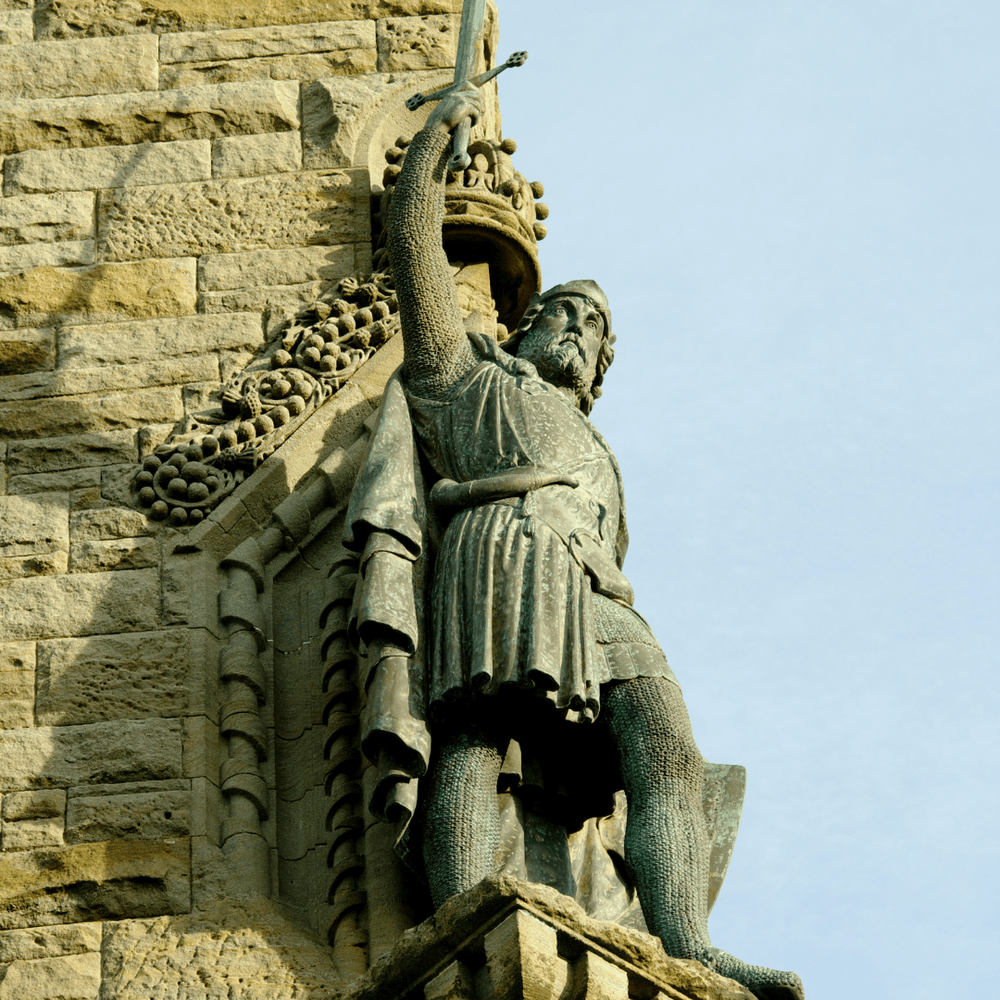
The Battle of Stirling Bridge (11 September 1297)
Stirling was the key to Scotland. Whoever held its castle and its bridge over the River Forth controlled the road between the Lowlands and the Highlands. In September 1297 an English army under the Earl of Surrey and Hugh de Cressingham, Edward’s treasurer in Scotland, arrived at Stirling to crush the rebellion.
Wallace and Moray waited on the high ground of the Abbey Craig, north of the river, where the Wallace Monument stands today. Between the two armies was a narrow wooden bridge, wide enough for only two horsemen side by side, and beyond it soft, marshy ground in a loop of the river.
On the morning of 11 September the English began to cross. The Scots waited until about half the army was over, then charged down and seized the end of the bridge. The English on the north bank were trapped, with no room for their heavy cavalry to move and no way back. Hundreds were cut down or drowned. Cressingham was killed, and Surrey, watching from the south bank, fled to Berwick. It was the first time a Scottish army had beaten the English in open battle in this war, and it made Wallace’s name.
The wooden bridge of 1297 is long gone. The stone Old Bridge you can walk across in Stirling was built later, close to the same spot. For the best view of the battlefield, stand on the walls of Stirling Castle: the loop of the Forth where the English were trapped is below you, and the Wallace Monument is on the Abbey Craig straight ahead.
Guardian of Scotland
After Stirling Bridge, Wallace was knighted and named Guardian of Scotland, ruling on behalf of the absent King John Balliol. Andrew Moray, his co-commander, died of his wounds later that year, which left Wallace in sole charge.
One of the few documents with Wallace’s name on it survives from this time. On 11 October 1297, Moray and Wallace wrote to the merchants of Lübeck and Hamburg to tell them that Scotland had been freed from the English and was open for trade again. That autumn Wallace also led a large raid into the north of England.
The Battle of Falkirk (22 July 1298)
Edward I came north himself in 1298 with a far larger army, including thousands of Welsh archers. Wallace avoided battle for weeks, hoping hunger would force the English home, and it very nearly did. But on 22 July, Edward caught the Scots near Falkirk.
Wallace drew his spearmen up in schiltrons, tight rings of men bristling with long spears, which the English knights couldn’t break. Edward’s archers could. Once the Scottish archers and cavalry had been driven off, the English longbowmen shot the schiltrons to pieces and the knights rode in. The defeat cost Wallace his reputation as a general, and he resigned as Guardian. Robert the Bruce and John Comyn took his place.
For the next few years Wallace worked as a diplomat. He travelled to the court of King Philip IV of France, and letters from Philip in 1300 show he was asking for help for Scotland. The help never came.
Capture, trial and execution (1305)
By 1304 most of Scotland’s leaders had made peace with Edward. Wallace refused, and Edward offered a reward for him. On 5 August 1305, Sir John de Menteith, a Scottish knight loyal to Edward, handed Wallace over to English soldiers at Robroyston, just outside Glasgow. A tall Celtic cross marks the spot today.
Wallace was taken to London and tried for treason in Westminster Hall on 23 August 1305. He wasn’t allowed to defend himself, but he is said to have denied being a traitor, since he had never sworn loyalty to Edward. The same day he was dragged through the streets to Smithfield, then hanged, drawn and quartered.
The barbarity of Wallace’s execution gives you an idea of how ruthless Edward was in his dream of ruling all of Britain (spoiler: it never happened). Wallace’s head was dipped in tar and set on a spike on London Bridge, and his limbs were sent to be displayed in Newcastle, Berwick, Stirling and Perth. It was meant as a warning. Instead it made Wallace a martyr, and within a year Robert the Bruce had taken up the fight.
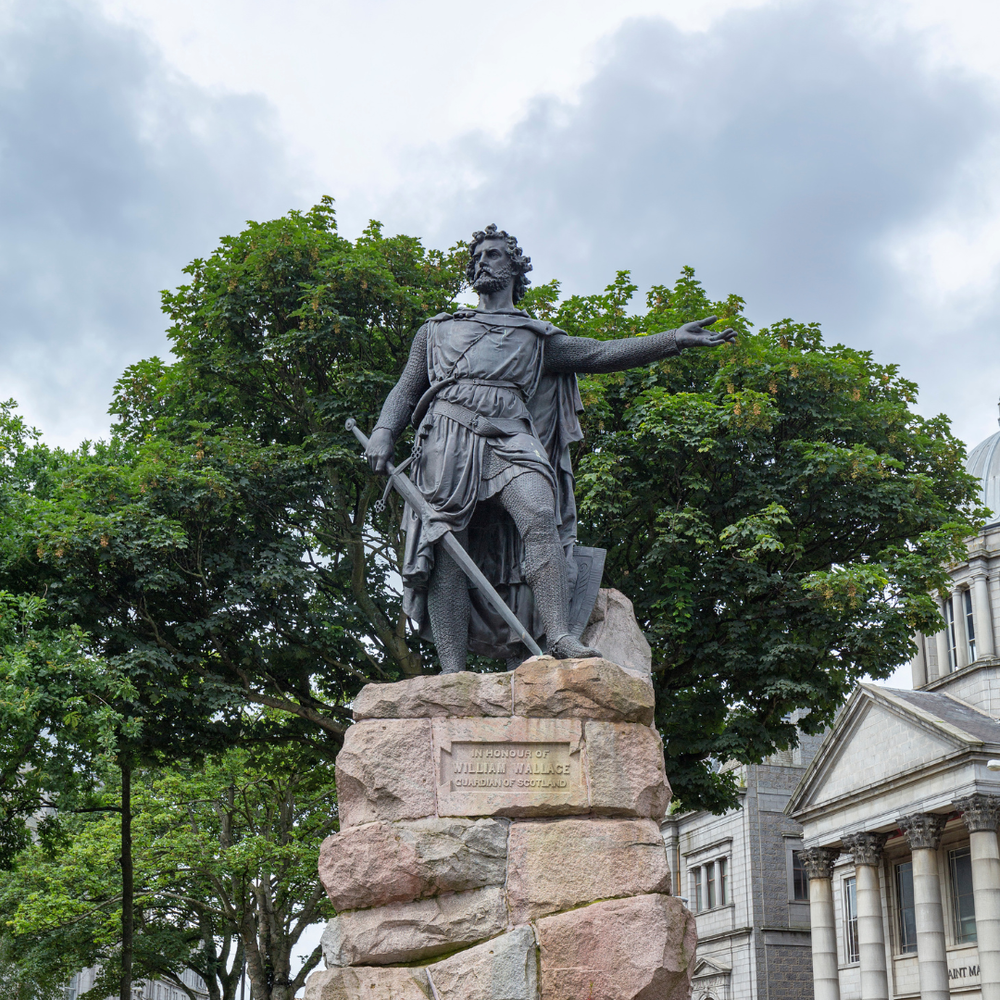
Braveheart vs history: what the film got wrong
Braveheart (1995) won five Oscars and brought a lot of people to Scotland, and we’re grateful for that. But it’s a film, not a documentary. These are the changes our guests ask about most.
- Stirling Bridge has no bridge. The battle in the film is fought on an open field. The real battle was won because of the bridge.
- No kilts in 1297. The belted plaid that became the kilt came in around the 16th century, about 300 years after Wallace. Blue face paint belongs to a much earlier age too.
- Wallace wasn’t a poor farmer. He was a landowner’s son, and was knighted after Stirling Bridge.
- No affair with the princess. Isabella of France was a small child in Wallace’s lifetime and didn’t marry into the English royal family until 1308, three years after his death.
- Bruce didn’t betray him at Falkirk. There’s no evidence Robert the Bruce fought for the English there.
- Most of it wasn’t filmed in Scotland. The big battle scenes were shot in Ireland, though Glen Nevis near Fort William appears too. Our Braveheart filming locations guide has the full list.
Where to see William Wallace’s Scotland
Stirling is the place to start. You can see the castle, the battlefield and the monument in one day, and it’s about an hour from Edinburgh or Glasgow.
- The National Wallace Monument, Stirling: a 67-metre (220-foot) Victorian tower on the Abbey Craig, where Wallace watched the English army before the battle. Climb its 246 steps for the view, and see the Wallace Sword, a two-handed longsword about 1.63 metres (5 feet 4 inches) long that’s said to have been his.
- Stirling Castle and the Old Bridge: the castle walls give you the best view of the battlefield, and the Old Bridge crosses the Forth close to where the wooden bridge stood. Read our Stirling Castle guide.
- Elderslie: a memorial marks the traditional site of his birthplace, near Paisley.
- Robroyston: a Celtic cross memorial where he was captured, on the edge of Glasgow.
- Lanark: where the rebellion began. A statue of Wallace looks out from the tower of St Nicholas Church.
- Dryburgh, in the Scottish Borders: a huge sandstone Wallace, put up in 1814 and said to be the first statue of him.
- Smithfield, London: a plaque on the wall of St Bartholomew’s Hospital marks the place of his execution.
See Wallace’s Stirling on a guided day tour
Our Stirling Castle day tours from Edinburgh and Glasgow start with time at the castle, where your guide tells the story of Wallace, Bruce and the Wars of Independence, and where you can look out over the battlefield and the Wallace Monument. Groups are small, never more than 16 travellers, and castle entry is paid on the day so you can choose how long to spend inside.
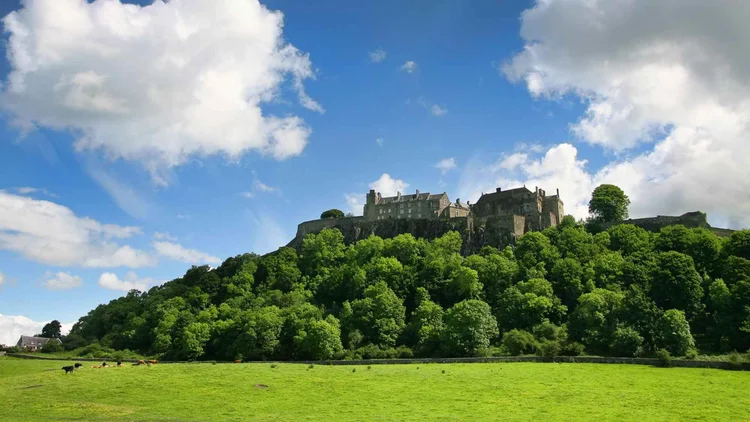 Stirling Castle Tour from EdinburghStirling Castle, with views over the Stirling Bridge battlefield, then Loch Lomond, Glengoyne Distillery and the Kelpies.From £92 pp50% depositView tour →
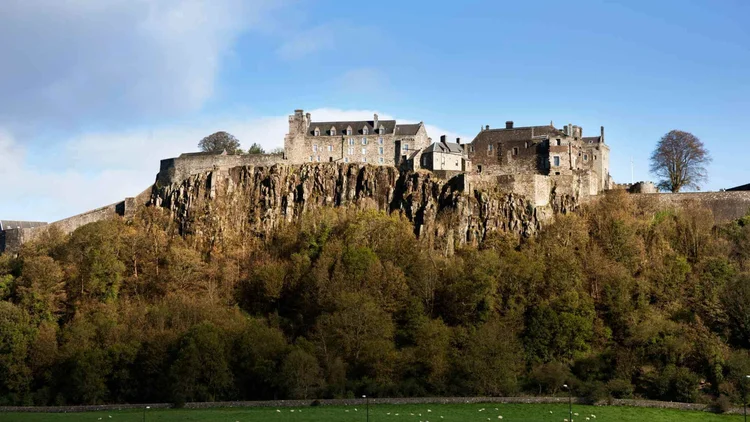 Stirling Castle Tour from GlasgowStirling Castle and the story of the Wars of Independence, then Loch Lomond and Glengoyne Distillery.From £90 pp50% depositView tour →
Want to climb the Wallace Monument too? A private Stirling day tour is planned around you, so just tell us you’d like to include it. You can also see all our day trips from Edinburgh and Glasgow.
William Wallace FAQs
Who was William Wallace?
William Wallace was a Scottish knight who led the resistance against Edward I of England during the First War of Scottish Independence. He won the Battle of Stirling Bridge in 1297, was made Guardian of Scotland, and was executed in London in 1305.
Was William Wallace a real person?
Yes. Wallace appears in English and Scottish records from the 1290s, and a letter he sent to the merchants of Lübeck in 1297 still survives. Many details of his life, though, come from a poem written about 170 years after his death.
How did William Wallace die?
He was betrayed and captured near Glasgow on 5 August 1305, tried for treason in London, and hanged, drawn and quartered at Smithfield on 23 August 1305. He was about 35.
Where was William Wallace born?
Probably at Elderslie, near Paisley in Renfrewshire, around 1270. Some historians think it was Ellerslie in Ayrshire. No record from the time settles it.
Is Braveheart historically accurate?
Not very. The film gets the broad outline right, but it leaves the bridge out of the Battle of Stirling Bridge, puts Wallace in a kilt 300 years too early, and invents his romance with Isabella of France, who was a child at the time.
Did William Wallace have a wife?
Blind Harry’s 15th-century poem says he married Marion Braidfute, and that her murder set off his rebellion. There is no record from Wallace’s lifetime that she existed.
What is the Wallace Monument?
The National Wallace Monument is a 67-metre (220-foot) tower on the Abbey Craig near Stirling, finished in 1869. It overlooks the site of the Battle of Stirling Bridge, has 246 steps to the top, and displays the Wallace Sword.
Can you visit Stirling on a day trip from Edinburgh?
Yes. Stirling is about an hour’s drive from Edinburgh. Our Stirling Castle day tour from Edinburgh starts at Stirling Castle, then visits Loch Lomond, a whisky distillery and the Kelpies.
More Scottish history
Last updated September 2026 by Jordan Ferguson.