

Glenfinnan Viaduct: Scotland's Harry Potter Bridge
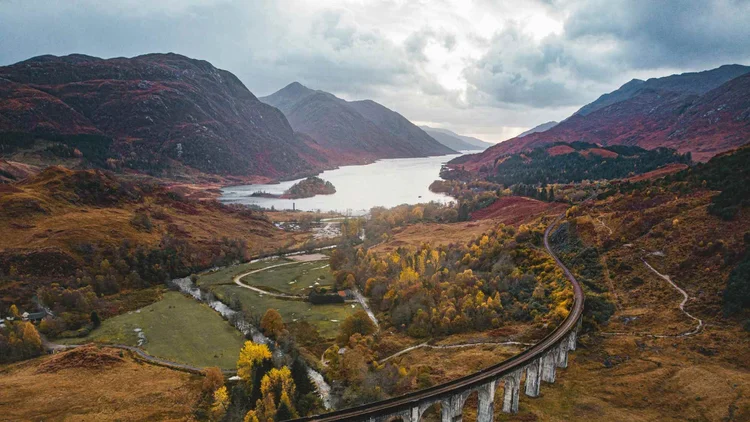
The Harry Potter bridge is the Glenfinnan Viaduct, a curving 21-arch railway bridge in the West Highlands, about 17 miles west of Fort William. The Hogwarts Express crosses it in the films, and in real life the Jacobite steam train still does in summer.
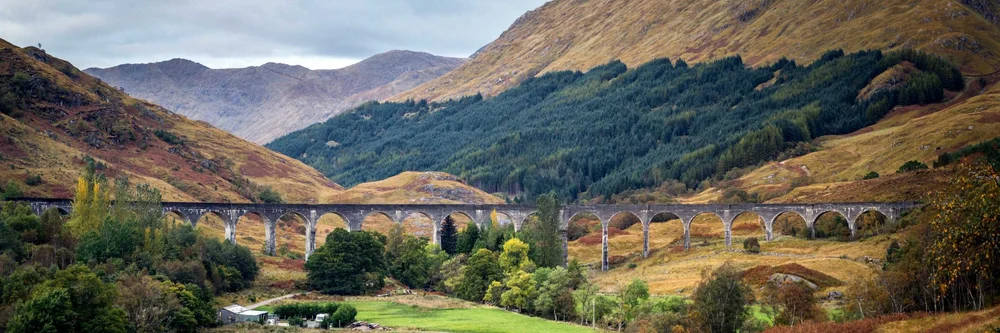
Here's how to see it: the best viewpoints, when the steam train crosses, how long to stay and how to get there. And why Glenfinnan is worth the trip even if you've never seen the films.
- Where: Glenfinnan, on the A830 between Fort William and Mallaig, at the head of Loch Shiel.
- Best view: the viewpoint path above the visitor centre car park, about 15 to 25 minutes on foot, with steps.
- Steam train: in the 2026 season, the Jacobite runs from 1 June to 23 October. It usually crosses the viaduct in the late morning heading west and mid-afternoon on the way back.
- How long: 60 to 90 minutes for the viaduct, 2 to 3 hours to enjoy Glenfinnan properly.
- Cost: the viaduct and viewpoints are free to visit. Parking is paid.
- Opened1901On the West Highland Line to Mallaig
- Length380 m (416 yards)21 concrete arches
- HeightAbout 30 m (100 ft)Above the River Finnan
- In the filmsChamber of Secrets onwardsThe Hogwarts Express route
- Nearest townFort WilliamAbout 17 miles east
- Scheduled tour2-Day Highland TourFrom Edinburgh, from £196 pp
On this page
- How long should you spend at Glenfinnan?
- Where is the best Glenfinnan Viaduct viewpoint?
- When does the Hogwarts Express cross the Glenfinnan Viaduct?
- The history of the Glenfinnan Viaduct
- How to get to the Glenfinnan Viaduct
- What else to see at Glenfinnan
- Other Harry Potter filming locations in Scotland
- See the Harry Potter bridge on a tour
- Glenfinnan Viaduct FAQs
- More to explore
How long should you spend at Glenfinnan?
The viaduct is easy to reach on foot, but if you stay a little longer you'll see why Glenfinnan is one of the great places in the Highlands, not just a film set.
| Time | What you can do |
|---|---|
| 60 to 90 minutes | Walk from the car park to the viaduct, climb to one viewpoint and spend some time under the arches. |
| 2 to 3 hours (our pick) | Add the Loch Shiel viewpoint, the Glenfinnan Monument and time to wait for a train without rushing. |
| Half a day or more | Include Glenfinnan Station and its small railway museum, longer paths, or arrive by train from Fort William. |
Don't arrive five minutes before the train. Glenfinnan is very busy in summer and the car parks fill up. Give yourself time to park, walk to a viewpoint and enjoy the landscape, rather than turning it into a sprint for one photo.
Where is the best Glenfinnan Viaduct viewpoint?
There isn't one single "Harry Potter viewpoint". Each path gives you a different view of the bridge and the glen.
1Beneath the viaduct
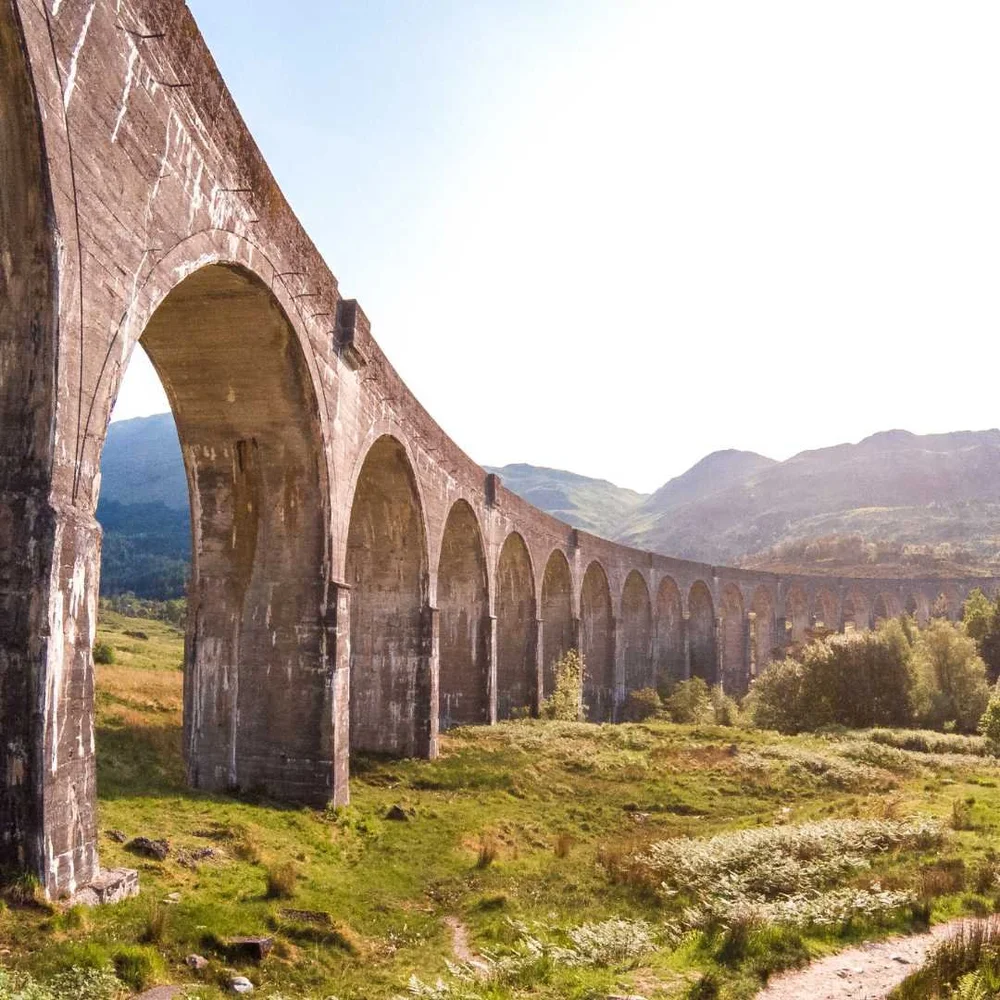
Follow the path along the River Finnan from the visitor car parks to stand right under the arches. It's about a 15-minute walk, mostly flat, and the best way to feel the size of the bridge. The National Trust for Scotland describes it as suitable for wheelchairs and pushchairs.
2The classic elevated view
Keep going uphill beyond the lower path for the famous view across the curve of the viaduct, the one you'll recognise from the films and postcards. Allow about another 10 minutes. There are steps, and the path can be slippery after rain.
3The Loch Shiel viewpoint
A short climb (about five minutes) behind the visitor centre gives you the best overall view of Glenfinnan: the viaduct in one direction, and the monument and Loch Shiel in the other. There are benches at the top.
4From Glenfinnan Station
If you arrive by train, follow the hillside trail from the station towards the viaduct. It takes around 30 minutes, and it's a lovely way to do it, because you've just crossed the bridge yourself.
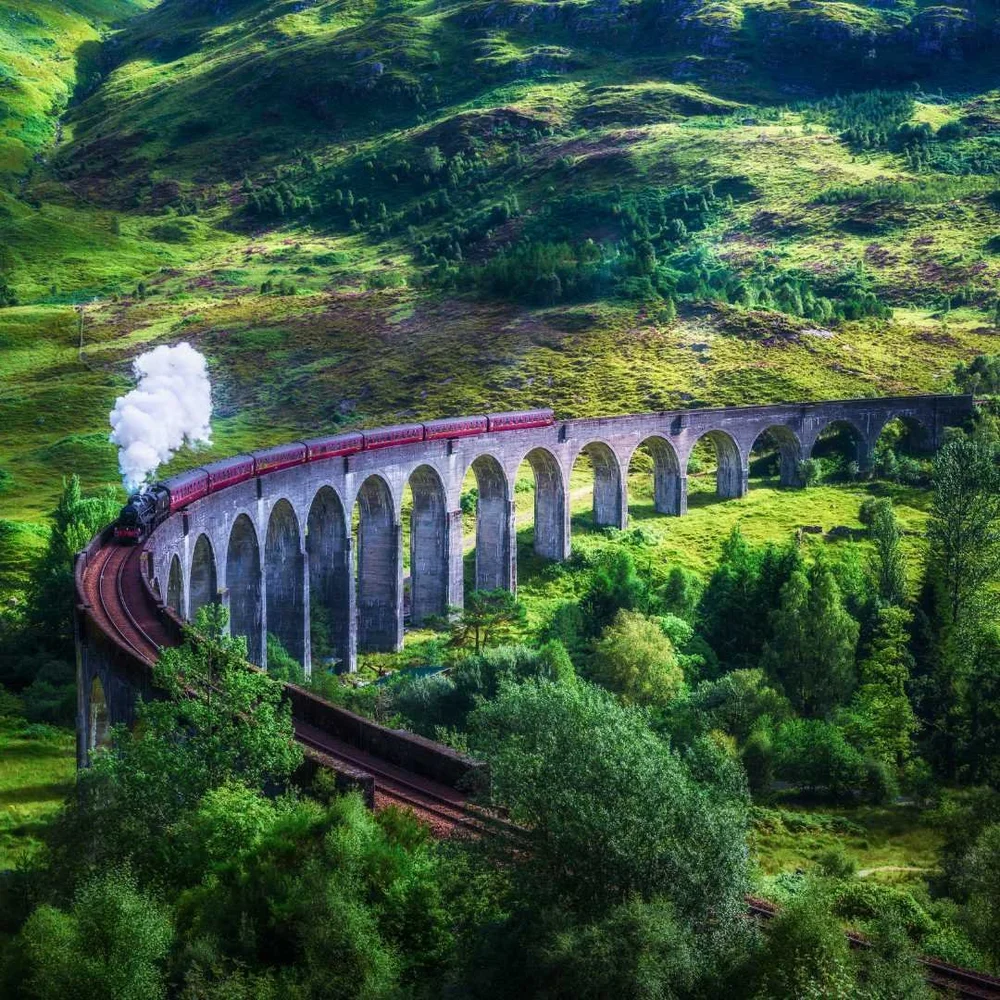
Want to see everything? The National Trust for Scotland suggests a circular walk of about 4 km that links several viewpoints. Allow 60 to 90 minutes of walking, plus time for photos.
When does the Hogwarts Express cross the Glenfinnan Viaduct?
The steam train from the films is the Jacobite, a heritage excursion run by West Coast Railways between Fort William and Mallaig. In the 2026 season, the morning train runs daily from 1 June to 23 October, leaving Fort William at 10:15 and Mallaig at 14:10. An afternoon train runs from 10 June to 25 September, leaving Fort William at 12:50 and Mallaig at 17:00.
That puts the morning train over the viaduct in the late morning heading west, and back across it in the mid-afternoon. Exact times vary, so check the Jacobite timetable before you plan your day around it, and get to your viewpoint early.
Can you ride the train across the viaduct?
Yes, in two ways. The Jacobite runs from Fort William to Mallaig and back, crossing the viaduct and continuing past Arisaig and Loch Morar to the coast. Tickets sell out quickly, so book well ahead.
The viaduct is also part of the ordinary West Highland Line, so regular ScotRail trains between Fort William and Mallaig cross it all year. You can get off at Glenfinnan and explore on foot. It's a good alternative if you can't get Jacobite tickets.
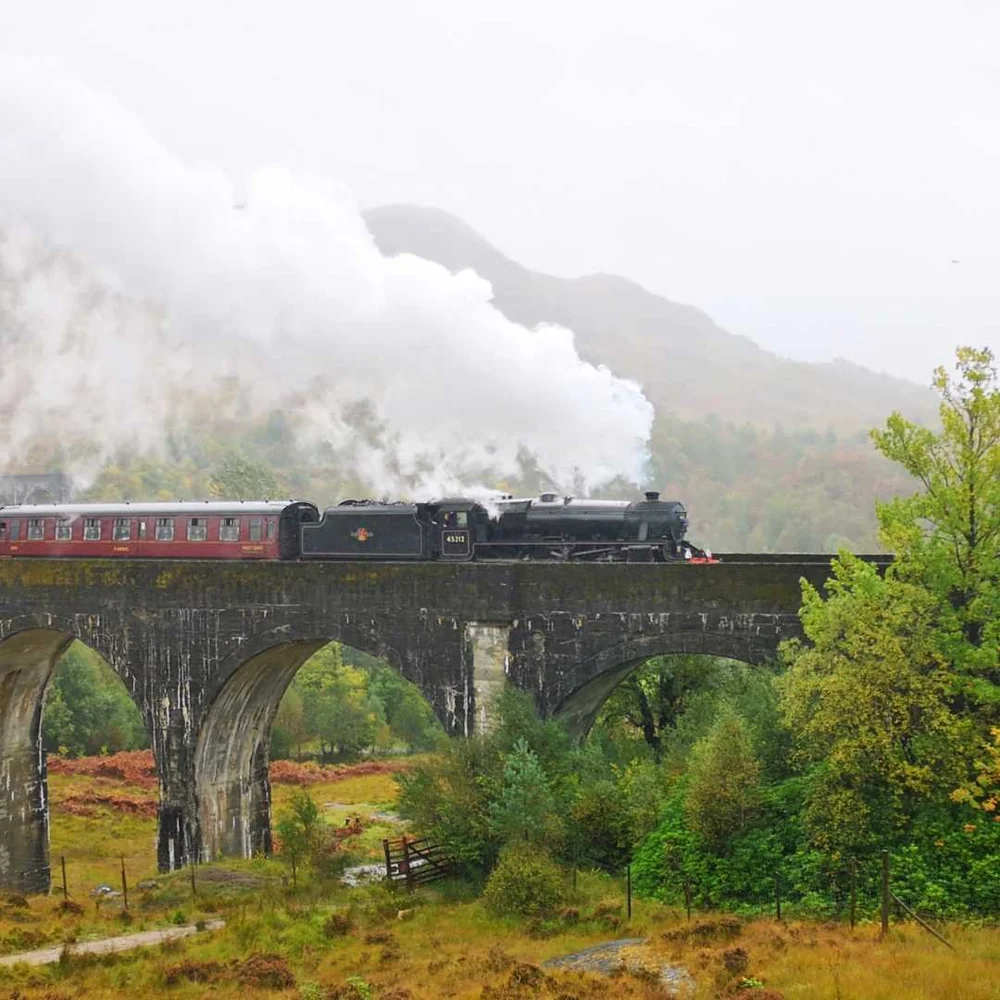
We can't promise the steam train will run on a particular day. Services can change for engineering work, fire risk or other reasons, so always check with West Coast Railways before you travel.
The history of the Glenfinnan Viaduct
The viaduct was built for the extension of the West Highland Railway to Mallaig, which opened in 1901. More than a century later it's still in daily use.
It was built by Robert McAlpine & Sons. Robert McAlpine became known as "Concrete Bob" for his use of mass concrete, at a time when big railway bridges were still usually built of stone. That's a big part of why the bridge matters, films or no films. It's Scotland's longest concrete railway viaduct.
1745: where the last Jacobite Rising began
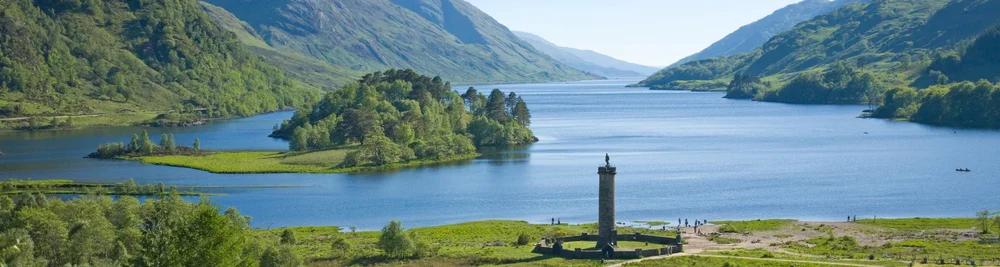
Long before the railway, Glenfinnan was famous for another reason. On 19 August 1745, Prince Charles Edward Stuart (Bonnie Prince Charlie) raised his standard here, hoping the Highland clans would back his attempt to restore the Stuart monarchy. At first the glen was almost empty. Then the clans began to appear from the hills, and around 1,200 men gathered to support the cause.
The campaign won some dramatic victories before it ended at the Battle of Culloden in April 1746. The Glenfinnan Monument, at the head of Loch Shiel, was built in 1815 in memory of the Highlanders who fought and died for the Jacobite cause. Our guide to the Jacobite Rising of 1745 tells the full story.
How to get to the Glenfinnan Viaduct
Glenfinnan is in Lochaber in the West Highlands, west of Fort William on the road to Mallaig. It's a long way from Edinburgh or Glasgow (about four hours by road), so it works best as part of a longer Highland trip rather than a quick day out.
- From Fort William: about 17 miles west on the A830, around 30 minutes by car. Fort William is the most practical base, and you can combine Glenfinnan with Glencoe and Ben Nevis.
- By train: take a regular ScotRail train from Fort William to Glenfinnan. You cross the viaduct yourself, then walk to the viewpoints, the monument and the station museum.
- By car: easy, but parking is the problem. Use the marked visitor car parks run by the National Trust for Scotland and the local community, and never park on the verge or block the road.
Visiting without driving? Our Loch Ness & Highlands 2-Day Tour from Edinburgh visits Glenfinnan on day two after a night in Fort William, alongside Loch Ness, Glencoe and Stirling Castle. It visits the viaduct but does not include a Jacobite steam-train ride; accommodation is separate.
Before you go
- Car parks get very busy around train times. Arrive early, or come by train or bus.
- Stay on the paths to protect the hillside from erosion.
- Wear shoes with grip if you're heading to the higher viewpoints in wet weather.
- The visitor centre and café have seasonal opening hours.
What else to see at Glenfinnan
Everything here is in one small area, which is why two or three hours works so much better than treating Glenfinnan as one bridge.
- Glenfinnan Monument: built in 1815 for the Highlanders of the 1745 Rising. When it's open, you can climb the tower for a great view.
- Loch Shiel: one of the finest long lochs in the West Highlands, stretching away between the mountains. It's every bit as impressive as the viaduct.
- Glenfinnan Station: the old station above the glen has a small railway museum and a hillside path to the viaduct.
- Arisaig and Mallaig: with more time, carry on west along one of Scotland's best coastal roads, past white beaches to the fishing port of Mallaig.
Other Harry Potter filming locations in Scotland
Glenfinnan is the most famous Harry Potter location in Scotland, but the films used several other West Highland landscapes. Our guide to Scotland's top filming locations covers more.
- Glencoe: the mountains around Glencoe appear in several films, including as the setting of Hagrid's hut in Prisoner of Azkaban.
- Loch Eilt: on the same road and railway west of Glenfinnan. Its small island is where Dumbledore's grave was filmed.
- Steall Falls and Glen Nevis: the waterfall appears in Goblet of Fire, during the dragon task.
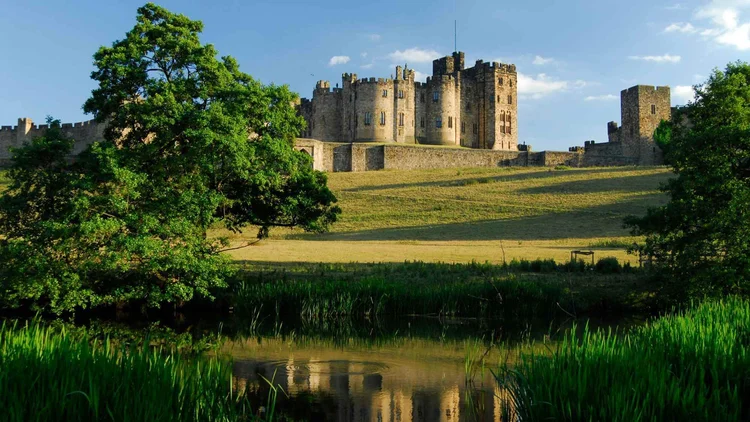
- Alnwick Castle: just over the border in England, it was used as Hogwarts in the first two films. Our Alnwick Castle tour from Edinburgh goes there in a day.
See the Harry Potter bridge on a tour
Our Loch Ness & Highlands 2-Day Tour is the scheduled tour that visits Glenfinnan. You'll spend the night in Fort William beneath Ben Nevis, visit the viaduct the next morning, then carry on through Glencoe and Stirling. It visits the viaduct, but it doesn't include a ride on the Jacobite steam train, and your night's accommodation in Fort William isn't included in the tour price.
Want to build a whole trip around Harry Potter? Our private Harry Potter tours combine Glenfinnan with other filming locations, at your own pace and on your own dates. You'll find more ideas on our filming location tours page.
Glenfinnan Viaduct FAQs
What is the Harry Potter bridge in Scotland called?
It's the Glenfinnan Viaduct. It carries the West Highland Line over the River Finnan near Loch Shiel, west of Fort William.
Where is the Glenfinnan Viaduct?
In Glenfinnan, in the West Highlands, between Fort William and Mallaig. The viaduct, the Glenfinnan Monument, Loch Shiel and the railway station are all close together.
Is it free to see the Glenfinnan Viaduct?
Yes. The viaduct and the walking viewpoints are outdoors and free. You'll pay for parking, and there may be charges for some visitor facilities or to climb the monument.
How far is the viaduct from the car park?
The path to the bottom of the viaduct is about a 15-minute walk from the main visitor car park. Allow about another 10 minutes uphill for the classic elevated view.
What time does the Hogwarts Express cross the Glenfinnan Viaduct?
In 2026, the morning Jacobite leaves Fort William at 10:15 and Mallaig at 14:10, so it crosses the viaduct in the late morning and again mid-afternoon. The afternoon service, from 10 June to 25 September 2026, leaves Fort William at 12:50. Check the West Coast Railways timetable before you go.
Can I ride the Hogwarts Express?
Yes. The Jacobite steam train runs between Fort William and Mallaig in the summer season and crosses the viaduct. Book well ahead, as tickets sell out. Regular ScotRail trains also cross the viaduct all year.
Does a Scotland's Wild tour visit Glenfinnan?
Yes. Our Loch Ness & Highlands 2-Day Tour visits the Glenfinnan Viaduct on day two. It doesn't include a ride on the Jacobite steam train. We also run private Harry Potter tours.
Is Glenfinnan worth visiting if I'm not a Harry Potter fan?
Yes. The viaduct is a landmark of railway engineering, Loch Shiel is one of the loveliest lochs in the West Highlands, and Glenfinnan is where the 1745 Jacobite Rising began.
More to explore
Last updated September 2026 by the Scotland's Wild team.