
Robert the Bruce: The King Who Won Scotland’s Freedom
Robert the Bruce: The King Who Won Scotland’s Freedom
Robert the Bruce is remembered as the king who won back Scotland’s independence. He was also a murderer, an outlaw, a master of guerrilla war and a ruthless politician who changed sides more than once. Here’s the whole story, the good, the bad and the ugly, and the places in Scotland where you can still follow it.
- Who was he? Robert I, King of Scots from 1306 to 1329, who led Scotland to victory in the First War of Scottish Independence.
- Why is he famous? He beat Edward II’s much larger English army at the Battle of Bannockburn in June 1314, and in 1328 England finally recognised Scotland as an independent kingdom.
- How did he become king? He killed his rival John Comyn in a church in Dumfries in February 1306, then had himself crowned at Scone six weeks later.
- Where is he buried? His body lies in Dunfermline Abbey and his heart is buried at Melrose Abbey.
- Born11 July 1274Probably at Turnberry Castle, Ayrshire
- Crowned25 March 1306At Scone, near Perth
- Greatest victory23–24 June 1314Battle of Bannockburn
- Independence recognised1328Treaty of Edinburgh–Northampton
- Died7 June 1329At Cardross, aged 54
- Visit his tombDunfermline AbbeyOn our St Andrews day tour, from £88 pp
On this page
- Who was Robert the Bruce?
- Robert the Bruce timeline
- Early life and the fight for the crown
- Murder in a church and a hasty coronation (1306)
- Defeat, exile and the spider
- The guerrilla king (1307 to 1314)
- The Battle of Bannockburn (23–24 June 1314)
- The Declaration of Arbroath and independence
- Death, a heart on crusade and a lost tomb
- Hero or villain? The good, the bad and the ugly
- Where to follow Robert the Bruce in Scotland
- Follow Robert the Bruce on a guided day tour
- Robert the Bruce FAQs
- More Scottish history
Who was Robert the Bruce?
Robert the Bruce was King Robert I of Scotland. He came from one of the most powerful noble families in the country, and his grandfather had been one of the leading claimants to the throne in the 1290s. When Edward I of England tried to take over Scotland, Bruce spent ten years switching between the Scottish and English sides before seizing the crown for himself in 1306.
For the next eight years he fought a war he seemed certain to lose, and won it. His victory at Bannockburn in 1314 is the most famous battle in Scottish history. After that it took him another fourteen years of raids, sieges and diplomacy to make England accept that Scotland was an independent kingdom. He died a year later.
He is often confused with William Wallace. The two fought the same enemy, and for a short time they were on the same side, but Wallace was a knight’s son who led the resistance in 1297 and 1298, while Bruce was a great lord who became king.
Robert the Bruce timeline
| Date | What happened |
|---|---|
| 11 July 1274 | Born, probably at Turnberry Castle in Ayrshire, into the Bruce family, Lords of Annandale. |
| 1292 | Edward I chooses John Balliol as King of Scots over Bruce’s grandfather. |
| 1296 to 1302 | Bruce swears loyalty to Edward, joins the Scottish rising, serves as a Guardian of Scotland in 1298, then submits to Edward again. |
| 10 Feb 1306 | He kills his rival John Comyn in Greyfriars Kirk, Dumfries, and is excommunicated by the Pope. |
| 25 March 1306 | Crowned King of Scots at Scone. |
| June 1306 | Defeated at Methven. His family is captured and he goes into hiding. |
| 1307 | He returns and wins at Glen Trool and Loudoun Hill. Edward I dies in July on his way north. |
| 1308 to 1314 | A guerrilla war wins back castle after castle. In March 1314 his men take Edinburgh Castle by climbing the rock at night. |
| 23–24 June 1314 | Bruce defeats Edward II at the Battle of Bannockburn. |
| 6 April 1320 | The Declaration of Arbroath is sent to the Pope. |
| 1328 | The Treaty of Edinburgh–Northampton recognises Scotland’s independence. |
| 7 June 1329 | Bruce dies at Cardross, near Dumbarton. He’s buried in Dunfermline Abbey. |
| 1330 | Sir James Douglas carries Bruce’s heart on crusade and is killed in Spain. The heart comes home to Melrose Abbey. |
Early life and the fight for the crown
Robert the Bruce was born on 11 July 1274, most likely at Turnberry Castle on the Ayrshire coast, the home of his mother, the Countess of Carrick. His father’s family were the Bruces of Annandale, descended from King David I. When the throne fell empty in 1290, his grandfather, also Robert de Brus, was one of the strongest of the thirteen claimants.
Edward I of England chose John Balliol instead. That left the Bruces and Balliol’s powerful Comyn relatives as bitter rivals, and it explains a lot about what young Robert did next. In 1296 he swore loyalty to Edward. In 1297 he joined the Scottish rising. After Wallace’s defeat at Falkirk in 1298 he became one of the Guardians of Scotland, sharing power with John Comyn of Badenoch, his greatest rival, and William Lamberton, Bishop of St Andrews. The two men couldn’t stand each other. Bruce resigned in 1300 and by 1302 had made peace with Edward again.
It looks like disloyalty, and in a way it was. But Bruce was loyal to one thing throughout: his family’s claim to the Scottish crown.
Murder in a church and a hasty coronation (1306)
On 10 February 1306, Bruce met John Comyn in the church of the Greyfriars in Dumfries. Nobody knows exactly what was said, but the meeting ended with Bruce stabbing Comyn in front of the high altar, and Bruce’s men finishing him off. Killing a man in a church was sacrilege, and the Pope excommunicated Bruce for it.
Bruce now had nothing to lose. Six weeks later, on 25 March 1306, he was crowned King of Scots at Scone. He had no crown and no Stone of Destiny, which Edward had taken to London ten years earlier, but he had a king’s title, and a war to fight for it.
Defeat, exile and the spider
Edward I was outraged. In June 1306 an English army surprised Bruce at Methven, near Perth, and scattered his men. Within months his wife, his daughter and his sisters had been captured. His sister Mary and the Countess of Buchan, who had helped crown him, were locked in cages hung on the walls of English-held castles. Three of his brothers were executed.
Bruce himself disappeared that winter. Nobody knows exactly where he went. He was probably hiding in the islands off the west coast, or in Ireland, and there are plenty of caves in Scotland and on Rathlin Island that claim to have sheltered him.
That’s where the most famous Bruce story comes in. Hiding in a cave, beaten and close to giving up, the king watched a spider trying again and again to swing its thread across to the cave wall. It failed six times. On the seventh it succeeded, and Bruce took it as a sign to try once more. The story was popularised by Sir Walter Scott in his Tales of a Grandfather in 1828, and there’s no record of it from Bruce’s lifetime. We tell the full story in the spider and Robert the Bruce.
Whatever inspired him, Bruce came back in 1307 a different kind of general. He won small battles at Glen Trool and Loudoun Hill, and avoided big ones he couldn’t win. In July 1307 Edward I died on his way to invade Scotland again, and his son Edward II had none of his father’s drive.
The guerrilla king (1307 to 1314)
Where the Scots lacked numbers, they made up for it with knowledge of the land and nerve. Bruce crushed the Comyns and their allies, then picked off the English garrisons one castle at a time. His men took castles by surprise, climbing walls at night with rope ladders, and then pulled the walls down so the English couldn’t use them again.
The most daring raid came in March 1314. Bruce’s nephew, Thomas Randolph, led about thirty men up the north face of the rock below Edinburgh Castle in the dark, guided by a man who had once used the route to visit his girlfriend in the town. They took the castle by surprise. You can read more about that night in our Edinburgh Castle guide.
The Battle of Bannockburn (23–24 June 1314)
By 1314 Stirling Castle was one of the last big English strongholds in Scotland, and its commander had agreed to surrender if no English army came to relieve it by midsummer. Edward II came, with one of the largest English armies ever sent into Scotland. Bruce was waiting for him on the road to Stirling, by the Bannock Burn.
On the first evening, an English knight, Sir Henry de Bohun, spotted Bruce riding in front of his men and charged at him with his lance. Bruce, on a small pony, waited until the last moment, stood in his stirrups and brought his battle-axe down on de Bohun’s head. When his commanders scolded him for the risk, he is said to have complained only that he had broken his good axe.
The next day, the Scottish spearmen, drawn up in schiltrons, attacked the English on boggy ground between the Bannock Burn and the River Forth. The English knights had no room to manoeuvre, and their archers couldn’t get into position. The English army broke. Edward II fled, first to Stirling Castle, which wouldn’t let him in, and then all the way to Dunbar and a boat home.
The Declaration of Arbroath and independence
Bannockburn didn’t end the war. England still refused to accept Scotland as an independent kingdom, so Bruce kept up the pressure with raids deep into the north of England, and in 1318 he captured Berwick.
He also fought with words. On 6 April 1320, Scotland’s nobles sent a letter to Pope John XXII, now known as the Declaration of Arbroath. It asked the Pope to recognise Bruce as king, and it declared that the Scots were fighting not for glory, riches or honours, but for freedom. It’s one of the most famous documents in Scottish history, and it was probably written at Arbroath Abbey.
In 1324 the Pope recognised Bruce as king. In 1327 Edward II was overthrown, and in 1328 the government of the young Edward III signed the Treaty of Edinburgh–Northampton, accepting that Scotland was an independent kingdom with Robert the Bruce as its king. After more than thirty years of war, Bruce had won.
Death, a heart on crusade and a lost tomb
Bruce had little time to enjoy his peace. He was ill for the last years of his life, and he died at his manor at Cardross, near Dumbarton, on 7 June 1329, aged 54. His son, David II, was just five. For centuries people said Bruce died of leprosy. Historians and scientists still argue about it, and there’s no firm evidence either way.
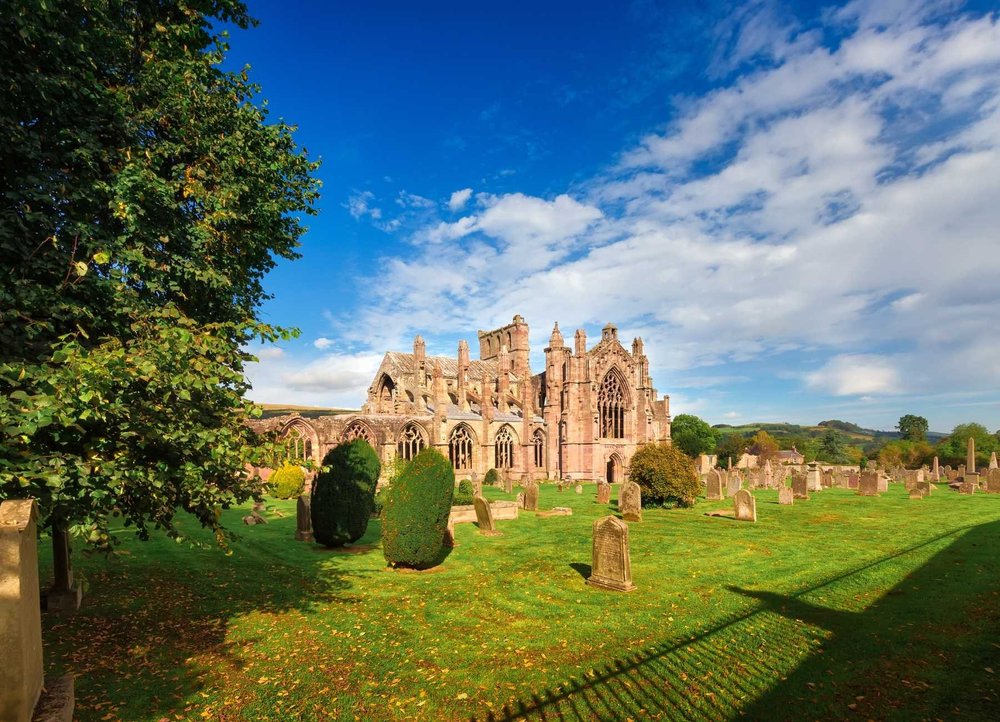
His body was buried in Dunfermline Abbey, the burial place of Scotland’s kings. But Bruce had always wanted to go on crusade, so he asked his friend Sir James Douglas to carry his heart to the Holy Land. In 1330 Douglas took the heart, in a silver casket, to fight the Moors in Spain, and was killed at the Battle of Teba. Legend says he threw the casket ahead of him into the enemy with the words, “Lead on, brave heart.” The heart was brought home and buried at Melrose Abbey.
Then Bruce was forgotten, or at least his grave was. The medieval abbey church at Dunfermline fell into ruin, and it wasn’t until 17 February 1818, when builders were clearing ground for a new church, that they found a skeleton wrapped in lead in the old royal choir. It was accepted as Bruce, and a cast was made of the skull. A casket thought to hold his heart was found at Melrose in 1921, and reburied there in 1998.
In 2024, a 3D model of Bruce’s face, built from that skull cast by historians at the University of Glasgow and the Face Lab at Liverpool John Moores University, went on display at Dunfermline Abbey. You can stand in front of him today.
Hero or villain? The good, the bad and the ugly
Bruce is Scotland’s great hero king, and he earned it. He won a war almost nobody thought he could win, and he left Scotland independent. But the story isn’t a simple one.
- The good: patient, brave and clever. He fought the war he could win, not the one his enemies wanted, and he was generous to many of those who changed sides to join him.
- The bad: he changed sides himself, several times, and he began his reign by killing a rival in a church.
- The ugly: his men burned and plundered their way through the north of England and through the lands of his Scottish enemies, and ordinary people paid the price.
Scots have argued about him for seven hundred years. Come and stand at Bannockburn or beside his tomb in Dunfermline, and make up your own mind.
Where to follow Robert the Bruce in Scotland
- Dunfermline Abbey: Bruce’s tomb lies under the pulpit of the abbey church, and the words KING ROBERT THE BRUCE are carved in giant stone letters around the top of the tower. The 3D model of his face is here too.
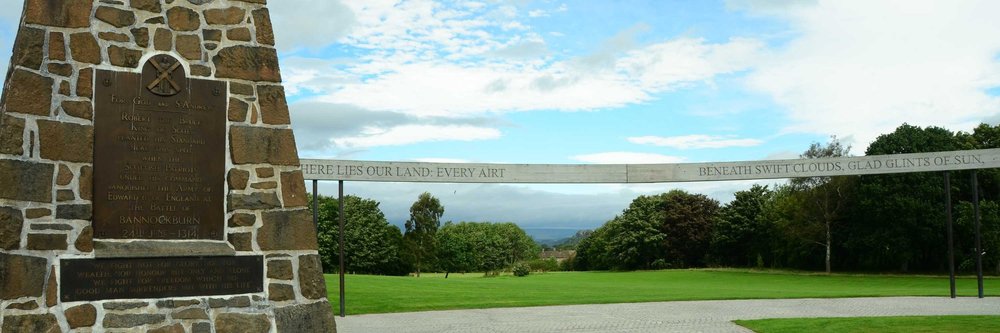
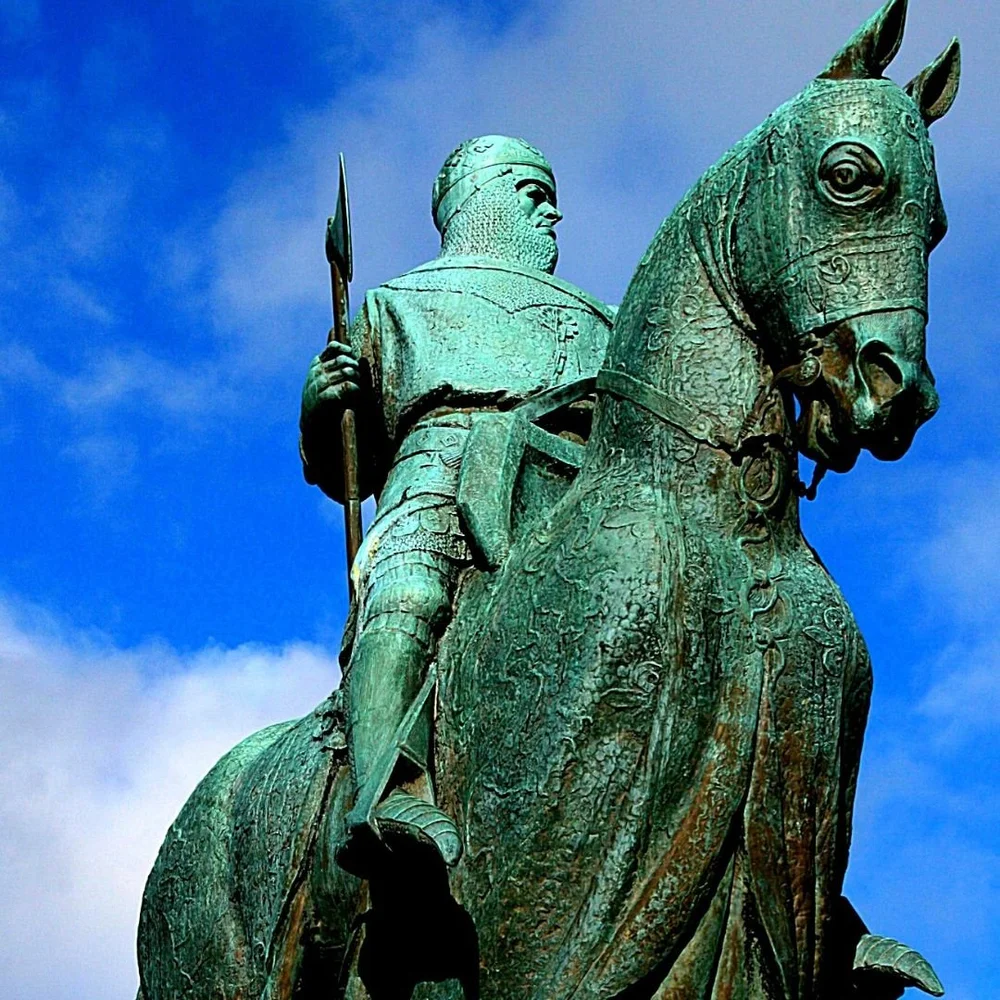
- Bannockburn, near Stirling: the battlefield, the 1964 statue of Bruce on horseback, and a visitor centre run by the National Trust for Scotland. Read our Battle of Bannockburn guide.
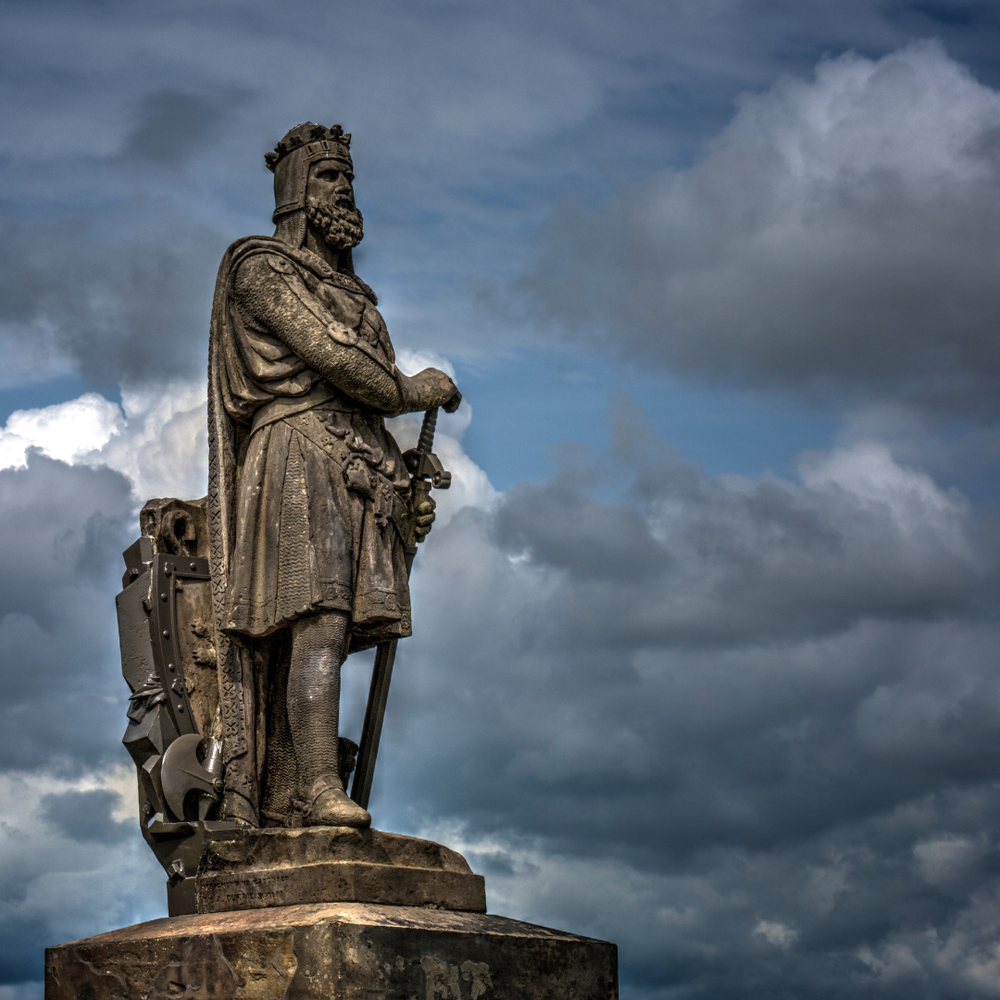
- Stirling Castle: the prize Bruce fought for in 1314. A statue of him stands on the castle esplanade.
- Melrose Abbey: the resting place of his heart, in the Scottish Borders. See our Melrose Abbey guide.
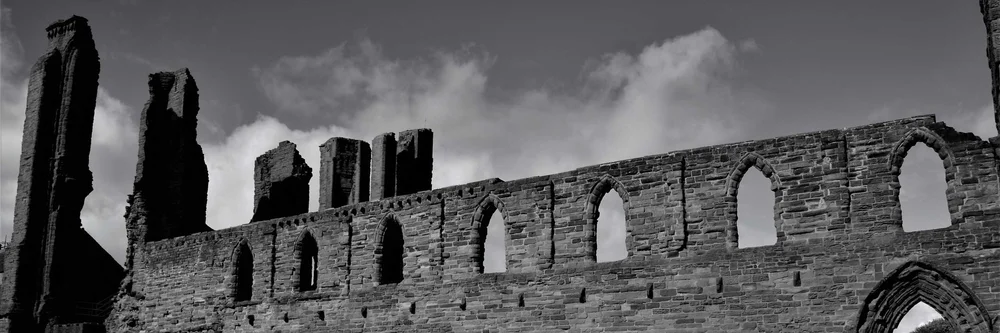
- Arbroath Abbey: where the Declaration of Arbroath was probably written. See our Arbroath Abbey guide.
- Scone: where he was crowned in 1306, just outside Perth.
- The King’s Cave, Isle of Arran: one of several caves that claim to be where Bruce saw the spider.
For five of the best, see our guide to Robert the Bruce sites in Scotland.
Follow Robert the Bruce on a guided day tour
Two of our day tours take you to the heart of Bruce’s story. The St Andrews day trip from Edinburgh finishes at Dunfermline Abbey, where he’s buried. Our Stirling Castle tours from Edinburgh and Glasgow visit the castle he fought for at Bannockburn. Groups are small, never more than 16 travellers, and your guide tells the story as you go.
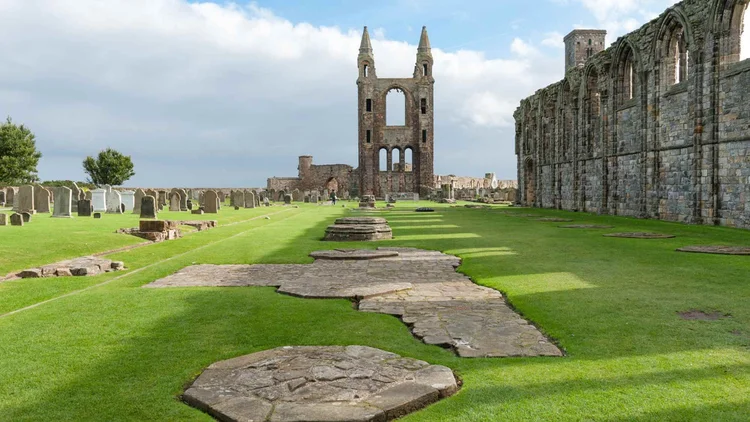 St Andrews Day Trip from EdinburghSt Andrews and the Fife coast, then Dunfermline Abbey and the tomb of Robert the Bruce.From £88 pp50% depositView tour →
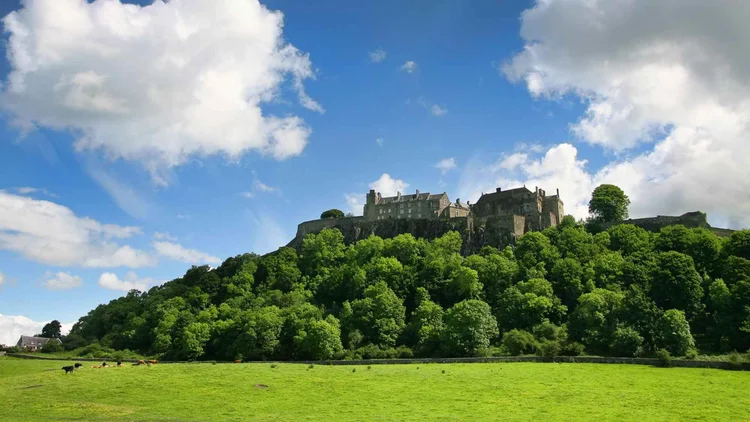 Stirling Castle Tour from EdinburghStirling Castle, the prize of Bannockburn, then Loch Lomond, Glengoyne Distillery and the Kelpies.From £92 pp50% depositView tour →
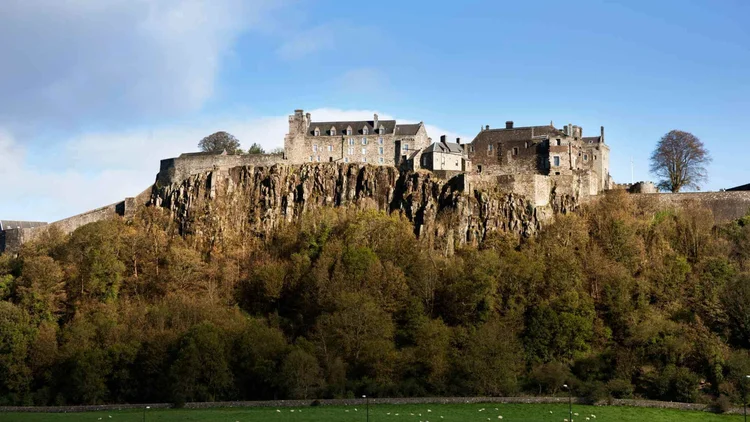 Stirling Castle Tour from GlasgowStirling Castle and the story of the Wars of Independence, then Loch Lomond and Glengoyne Distillery.From £90 pp50% depositView tour →
Entry to the abbey and the castle is paid on the day. If you’d like to see Bannockburn, Melrose or Arbroath as well, a private castle tour can be built around Bruce’s story.
Robert the Bruce FAQs
Who was Robert the Bruce?
Robert the Bruce was King Robert I of Scotland, who reigned from 1306 to 1329. He led Scotland to victory over England in the First War of Scottish Independence, most famously at the Battle of Bannockburn in 1314.
What is Robert the Bruce famous for?
He is famous for winning the Battle of Bannockburn in 1314, for the legend of the spider that inspired him to keep fighting, and for winning England’s recognition of Scotland’s independence in 1328.
Where is Robert the Bruce buried?
His body is buried in Dunfermline Abbey in Fife. His heart is buried at Melrose Abbey in the Scottish Borders.
How did Robert the Bruce die?
He died on 7 June 1329 at Cardross, near Dumbarton, aged 54, after a long illness. It was often said to be leprosy, but historians still disagree.
What happened to Robert the Bruce’s heart?
Sir James Douglas carried it on crusade in a silver casket and was killed fighting in Spain in 1330. The heart was brought back to Scotland and buried at Melrose Abbey, where it was found again in 1921 and reburied in 1998.
Is the Robert the Bruce spider story true?
There’s no record of it from Bruce’s lifetime. It was popularised by Sir Walter Scott in 1828, and several caves in Scotland and Ireland claim to be where it happened.
Were Robert the Bruce and William Wallace friends?
They fought on the same side in 1297 and 1298, and Bruce became a Guardian of Scotland after Wallace resigned. There’s no evidence they were close, and no evidence Bruce betrayed Wallace, as the film Braveheart suggests.
Can you visit Robert the Bruce’s tomb?
Yes. His tomb is in Dunfermline Abbey, about 30 minutes from Edinburgh. Our St Andrews day trip from Edinburgh visits Dunfermline Abbey at the end of the day.
More Scottish history
Last updated September 2026 by Jordan Ferguson.