

Practical Scotland travel advice
Should You Drive in Scotland or Take a Tour? An Honest Guide for First-Time Visitors
Compare the freedom of a road trip with the ease of a guided journey, and choose the option that fits your time, confidence and budget.
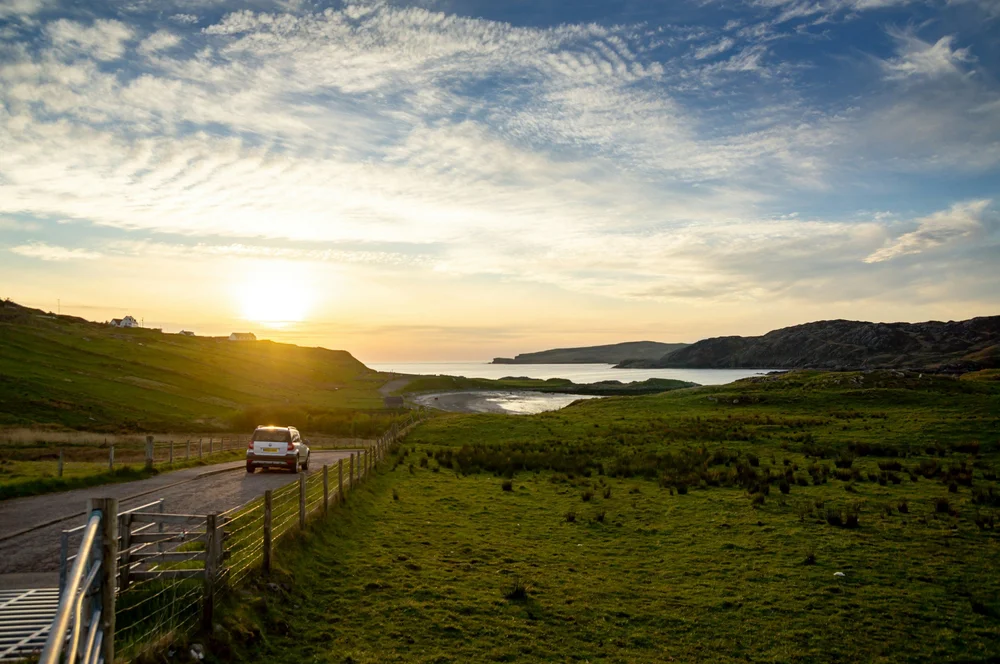
Scotland’s winding roads, quiet lochs and mountain viewpoints make a road trip tempting. But a hire car is useful only if it helps you have the holiday you want. We run guided tours, so we know their advantages; we also recognise when travelling independently makes more sense.
Self-drive Scotland or a guided tour: the comparison
Start with the trade-offs that matter most to you. Neither approach is automatically cheaper or better.
Swipe sideways to compare both options, or focus the table and use the arrow keys.
| Consideration | Self-drive trip | Small-group tour |
|---|---|---|
| Flexibility | You choose your route and stops, around any accommodation or ferry bookings. | A planned route with set departure times and a shared pace. |
| Driving | You handle navigation, parking and unfamiliar roads. | Your guide handles the driving; everyone can watch the scenery. |
| Planning | You arrange your vehicle, accommodation, route, ferries and visits. | The route and daily travel logistics are planned; check accommodation arrangements and inclusions. |
| Local insight | You research the places and stories that interest you. | A guide shares local history, stories and context along the way. |
| Privacy | You travel with your own companions. | You share the journey with other travellers. |
| Cost | Vehicle costs can be shared, but fuel, parking, insurance and ferries add up. | Fares are usually per person; accommodation, meals and admissions may be extra. |
| Best fit | Confident drivers, slower stays, remote cottages, photography and independent walks. | Visitors wanting a planned journey, local interpretation and time away from the wheel. |
What is driving in Scotland really like?
Experienced visitors can enjoy driving here, but rural journeys need more patience than a mileage total suggests. You drive on the left. Major routes are different from the narrow, winding roads you may encounter in the Highlands and islands.
Understand single-track roads and passing places
Some rural roads have room for only one vehicle. Passing places let oncoming traffic through and allow a vehicle behind to overtake. Pull into a passing place on your left, or wait opposite one on your right. Give way to uphill traffic when possible, and be prepared to reverse to a passing place if necessary. Never park in a passing place. See Highway Code rules 155–156.
Plan a day of sightseeing, not just a drive
Allow time for bends, traffic, comfort stops, walks, photographs and changing weather. Watch for livestock and wildlife near rural roads, and plan fuel stops before heading into remote areas.
A useful Skye planning example
Our three-day Skye tours spend two nights on the island, giving you a full day there between the journeys north and south. If you are self-driving, use the same principle: give the place you came to see its own time, rather than treating arrival as the end of the visit. Use our interactive Scotland map to understand where your chosen places sit before building the route.
Book island travel around the route
On CalMac’s bookable routes, the operator strongly recommends reserving travel in advance. A vehicle booking can therefore set the timetable for part of your road trip. Check the route’s booking rules, current timetable and service status before travelling. Read CalMac’s vehicle reservation advice.
When does a self-drive Scotland trip work best?
A car is a good choice when independence is central to the trip and someone in your group is happy to drive.
- You want to stay in one region. Several nights in Argyll, Perthshire, the Cairngorms or on Skye leave room for quieter discoveries.
- Your plans revolve around photography or walking. You can choose your own start times and spend longer in one location.
- You are staying somewhere remote. Rural cottages and walking trailheads can be harder to reach by public transport.
- You prefer privacy. Your group decides when to leave, where to eat and which detour is worth taking.
- You enjoy the planning. Choosing accommodation, researching routes and organising visits feels like part of the holiday.
The trade-offs to accept
The driver needs to concentrate on the road, and your group owns the logistics. Spontaneity also has limits once accommodation and ferries are booked. If every day means a long drive and another hotel, reducing the number of regions can make the trip more enjoyable.
Do you need a hire car during a city stay?
For many central Edinburgh visits, walking, wheeling and public transport are more convenient than driving and parking. The council provides park-and-ride and travel information. Individual accessibility needs and the location of your accommodation may change what works best.
Consider collecting your car after the city stay. If you want one day outside the city, compare that day’s rental logistics with day trips from Edinburgh or day trips from Glasgow.
When is a small-group Scotland tour worth it?
A guided tour is particularly useful when nobody wants to drive, your time outside the cities is limited, or understanding the places matters as much as seeing them.
Everyone can enjoy the journey
The roads through the Highlands are part of the experience. With your guide at the wheel, you can watch the landscape, take photographs from suitable stops and listen to the stories without managing the next junction.
You get context and time outside the vehicle
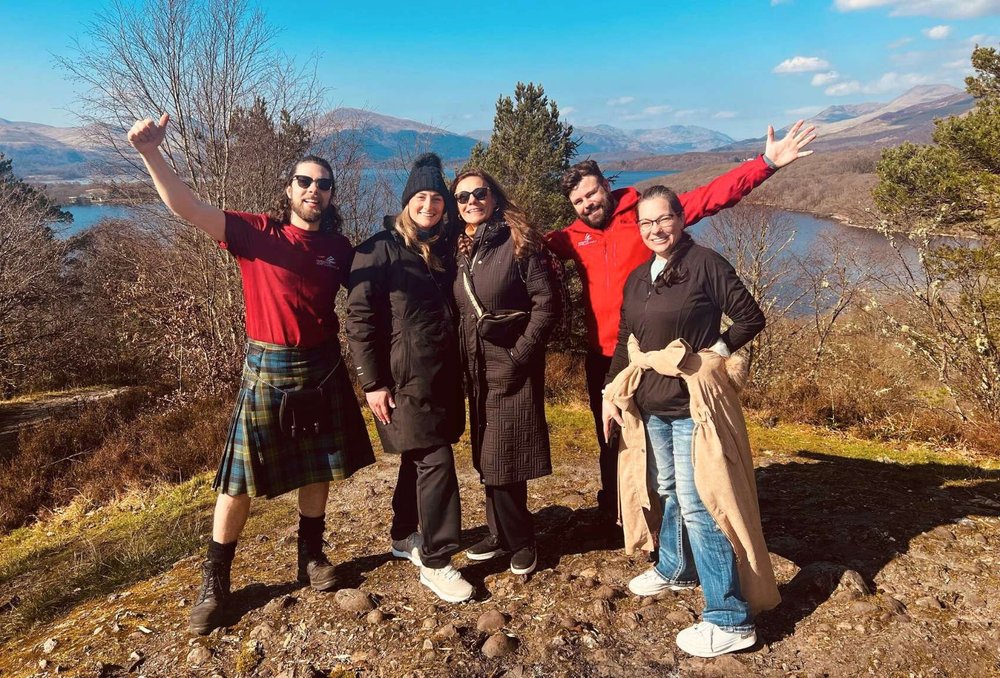
Scotland’s Wild’s scheduled tours have a maximum of 16 travellers. Our approach is active sightseeing: viewpoints, historic places and scenic walks, alongside the major destinations. A guide adds the history and local stories that make a stop more than a photograph.
Local knowledge you can read before you travel
In Jim’s local guide to Skye, he connects the island’s landscapes with its geology, clan history and legends. It is a useful example of the extra context guided travel can bring, and a helpful read whether you visit independently or with us.
The trade-offs to accept
A scheduled tour has a shared route and pace. You cannot turn every short stop into a half-day visit, and you travel with other people. Read the itinerary’s walking requirements and inclusions before booking; contact us if you have mobility questions or are travelling with children.
If you want your own group, a tailored pace and someone else to drive, explore private tours of Scotland. They can be a useful alternative, subject to the agreed itinerary and availability.
Is self-driving cheaper than taking a tour?
It depends on your group size, travel dates, route and what each option includes. Compare the total for the same people, number of days and standard of accommodation. A car’s daily rate and a tour’s advertised fare are not equivalent totals.
What is included with Scotland’s Wild?
Our scheduled tour fares cover the guided journey and transport. Accommodation on scheduled multi-day tours is charged separately; we can arrange it for you. Meals and attraction admissions depend on the individual tour’s inclusions. On our scheduled Orkney and Outer Hebrides tours, the itinerary’s ferry crossings are included.
Check the individual tour page and available dates for current fares and inclusions. Private tour arrangements depend on your agreed proposal.
A fair way to compare
Add the shared vehicle costs to the rest of your self-drive budget, then divide the total by your group size. For a tour, add each person’s fare and extras. Compare both totals per person and ask which option gives you the experience you actually want.
When is a private driver-guide worth the cost?
A private driver-guide is worth considering when your own route, pace or travelling companions matter more than joining a shared itinerary. You have a guide and vehicle for your party, so nobody in your group has to handle unfamiliar roads. A scheduled small-group tour is often the better fit if its route suits you and you are happy to share the journey.
- You have specific places to visit. Family-history locations, a particular distillery or a special-interest route may not fit a scheduled itinerary. A bespoke journey lets us discuss a realistic route around those priorities.
- Your group needs a different pace. Tell us about walking preferences, ages and mobility needs before planning. A private enquiry lets us assess what is practical; it is not a promise that every attraction or vehicle is accessible.
- You want to travel only with your companions. A family celebration or a group of friends may value having its own guide and time together.
- You want help joining the parts of the trip together. Discuss your existing hotels, preferred collection point and onward plans when requesting a bespoke itinerary.
Compare the total for your whole party
Our ready-made private day tours show a price for the group rather than a scheduled fare per person. Bespoke private tours are quoted for your agreed route and arrangements. Divide the private total by the number travelling, then compare it with all scheduled fares and extras for the same people and dates.
Check whether each option includes accommodation, ferries and attraction entry. Accommodation is extra on scheduled multi-day tours; a bespoke private proposal may include it or be planned around hotels you have already booked. Food and drink, and any other exclusions, still need to be budgeted for. Do not assume a private tour will cost less simply because you are sharing the vehicle.
Which private option should you explore?
For one guided day with a published route, compare our private day tours. For a personalised route, ancestry stops or a multi-day journey, tell us about your private Scotland trip. Include your dates, party size, interests, preferred pace and budget so the team can assess a suitable proposal.
Combine independent travel with a guided tour
You do not have to use one method for the whole holiday. A suggested first-trip approach is:
- Start with a city stay. Spend two or three days exploring Edinburgh or Glasgow using the transport that suits you.
- Choose your Highland journey. Join a day trip if you want to return to the same base, or a multi-day tour if Skye or the islands are a priority.
- Add an independent stay if you want one. Hire a car for a quieter region, remote accommodation or walking plans, rather than keeping it throughout the city stay.
This is a planning idea, not a fixed package. Check your tour’s departure and finish city before arranging onward travel. In particular, our scheduled multi-day journeys starting in Glasgow finish in Edinburgh.
Public transport can also connect parts of your holiday. Research the actual connections between your accommodation and chosen places; reaching a town does not necessarily mean every rural attraction is easy to visit from there.
Which Skye tour fits seven nights in Scotland?
Choose the three-day Skye tour if you want more city or independent time; choose five days if Skye and a broader west-coast journey are the main purpose of the trip. Our scheduled three-, five- and seven-day Skye tours all spend two nights on Skye. The extra days add other parts of Scotland, rather than extra nights on the island.
Count the seven nights you will actually spend in Scotland, separately from any overnight flight. The examples below leave nights for the arrival and finish cities; they are planning ideas, not complete packages. Check the live departure dates, meeting time and finish city before booking flights or hotels.
| Tour choice | Nights within the tour | Nights outside the tour and best fit |
|---|---|---|
| 3-day Skye & Highlands | 2 nights on Skye | 5 nights outside the tour. For example, 3 nights in the departure city before the tour and 2 in Edinburgh afterwards. Useful for combining Skye with a longer city stay or independent travel. |
| 5-day Skye & west coast | 4 nights: Oban, Skye ×2 and Inverness | 3 nights outside the tour. For example, 2 nights in the departure city before the tour and 1 in Edinburgh afterwards. Useful if Oban, ancient Argyll and more Highland stops matter to you. |
| 7-day Skye & Outer Hebrides | 6 nights: Skye ×2, Lewis & Harris ×2 and Inverness ×2 | Only 1 night outside the tour. This uses almost the whole holiday and leaves little flexibility for arrival and onward travel. Consider extending your stay if you want a city visit and a night on either side. |
Compare the three-day and five-day routes
For the shorter journey, read the three-day Skye itinerary from Edinburgh or three-day itinerary from Glasgow. For the wider west-coast route, compare the five-day Skye tour from Edinburgh or five-day tour from Glasgow. The five-day starting fare is £444 per adult, with four nights of accommodation extra; your selected departure gives the final fare and availability.
Edinburgh-start routes return to Edinburgh. Scheduled Glasgow-start multi-day routes finish in Edinburgh, so use the finish city when planning the final hotel. Both three- and five-day Skye options are for ages 12 and over. For younger children or a different route and pace, discuss a private Scotland itinerary.
Keep flight and tour days separate
If you are flying from the United States, plan to be in the departure city before the morning your tour leaves. Check the expected return time and allow time for onward travel; avoid relying on a same-day international flight after a multi-day tour. For the bigger island journey, compare all three Skye tour lengths and consider more nights in Scotland.
Choose the tour option that fits your trip
If you decide to leave the driving to us, start with your available time and departure city.
Frequently asked questions
Is it difficult for tourists to drive in Scotland?
Experienced drivers can find it manageable. The main adjustments are driving on the left, narrow rural roads and passing-place etiquette. Choose a realistic route, allow extra time and make sure the driver is comfortable with the conditions.
Do you need a car in Edinburgh?
Many central Edinburgh visits work well on foot, by wheeling or using public transport. Your accommodation and accessibility needs may change that. If you only need a car for rural travel, consider hiring it after your city stay.
Can you visit the Scottish Highlands without a car?
Yes. Trains and buses serve several Highland towns, and guided day and multi-day tours reach destinations from Edinburgh, Glasgow and Inverness. Check onward connections carefully if you plan to visit remote places independently.
Is a small-group tour of Scotland worth it?
It can be particularly valuable if you want local stories, a planned route and everyone free to enjoy the scenery. Self-driving may suit you better if complete independence, privacy or long visits to individual places matter most.
Is self-driving cheaper than taking a tour?
There is no universal answer. Compare the complete cost for the same group and dates, including car hire, insurance, fuel, parking, ferries, accommodation, meals and attractions. For a tour, include the fare and all separately priced extras.
Is accommodation included on Scotland’s Wild multi-day tours?
Accommodation on our scheduled multi-day tours is charged separately, and we can arrange it for you. Read your chosen tour’s accommodation information before booking. Private tours follow the arrangements in your agreed proposal.
Which Skye tour fits a seven-night Scotland trip?
The three-day tour uses two nights within the tour, leaving five outside it. The five-day tour uses four, leaving three. Both spend two nights on Skye; five days adds Oban and Inverness. The seven-day route uses six nights and adds the Outer Hebrides. Compare the seven-night planning examples and check the departure and finish cities before arranging travel. Accommodation is charged separately.
When is a private driver-guide worth paying for?
Consider a private driver-guide if you want your own group, particular stops or a pace tailored to your party, while someone else handles the driving. Compare the total private quote and inclusions with the scheduled fares and extras for everyone travelling. See how to choose between private and scheduled travel.
How far in advance should I plan a Scotland road trip?
Once your dates and route are clear, arrange the essentials that constrain the journey: accommodation, your rental vehicle and any bookable ferry crossings. Availability varies by route and season, so there is no single booking deadline for every trip.