
The Loch Ness Monster: The True Story of Nessie
The Loch Ness Monster: The True Story of Nessie
For almost a century, people have stood on the shore of Loch Ness scanning the dark water for a long neck or a humped back. Here's the whole story of Nessie: where the legend began, the famous sightings and photographs, what scientists have found, and how to go looking yourself.
- What is it? A legendary creature said to live in Loch Ness, usually described as having a long neck, a small head and one or more humps on its back. Locals call it Nessie.
- Where? Loch Ness, in the Scottish Highlands, a 23-mile freshwater loch running south-west from Inverness towards Fort Augustus.
- Is it real? No one has ever produced proof. The most famous photo was a hoax, and a 2018 DNA survey of the loch found no trace of a reptile. But sightings are still reported every year, and nobody has explained every one.
- First recorded565 ADSt Columba and the "water beast" of the River Ness
- Legend took off1933After a new road opened along the north shore
- Official sightingsAbout 1,180On the Official Sightings Register, by 2026
- Loch Ness length23 miles (36 km)Up to 1.7 miles wide
- Deepest pointAbout 230 m (754 ft)More water than every lake in England and Wales combined
- Guided day tourLoch Ness from EdinburghFrom £96 pp
On this page
- Where is the Loch Ness Monster?
- The Loch Ness Monster story, from 565 AD to today
- St Columba and the first sighting (565 AD)
- 1933: the year Nessie became a monster
- The Surgeon's Photograph: the most famous Nessie picture
- Is the Loch Ness Monster real? What the science says
- Loch Ness Monster facts
- How to look for Nessie yourself
- See Loch Ness on a guided tour
- Loch Ness Monster FAQs
- More Highland stories
Where is the Loch Ness Monster?
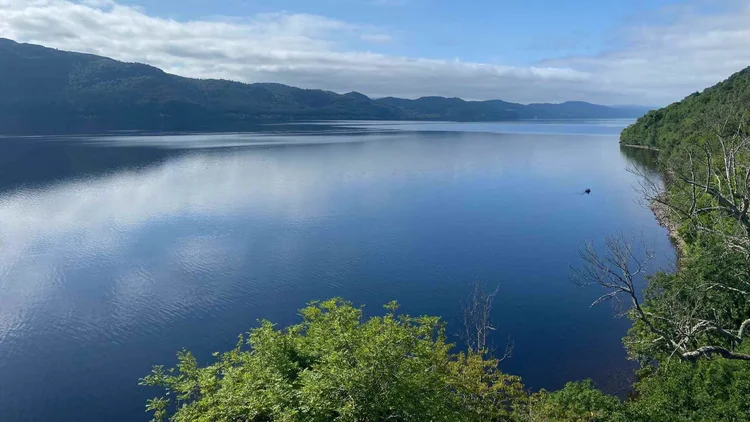
The Loch Ness Monster is said to live in Loch Ness, a long, narrow, very deep freshwater loch in the Scottish Highlands. It lies in the Great Glen, the geological fault that cuts across Scotland from Inverness in the north-east to Fort William in the south-west.
The loch runs for about 23 miles, from Lochend near Inverness to the village of Fort Augustus, and it's never more than 1.7 miles wide. What makes it the perfect home for a legend is its depth and its darkness. It's up to about 230 metres (754 feet) deep and holds more fresh water than all the lakes in England and Wales put together. Peat washed down from the hills stains the water so dark that you can barely see a few metres below the surface.
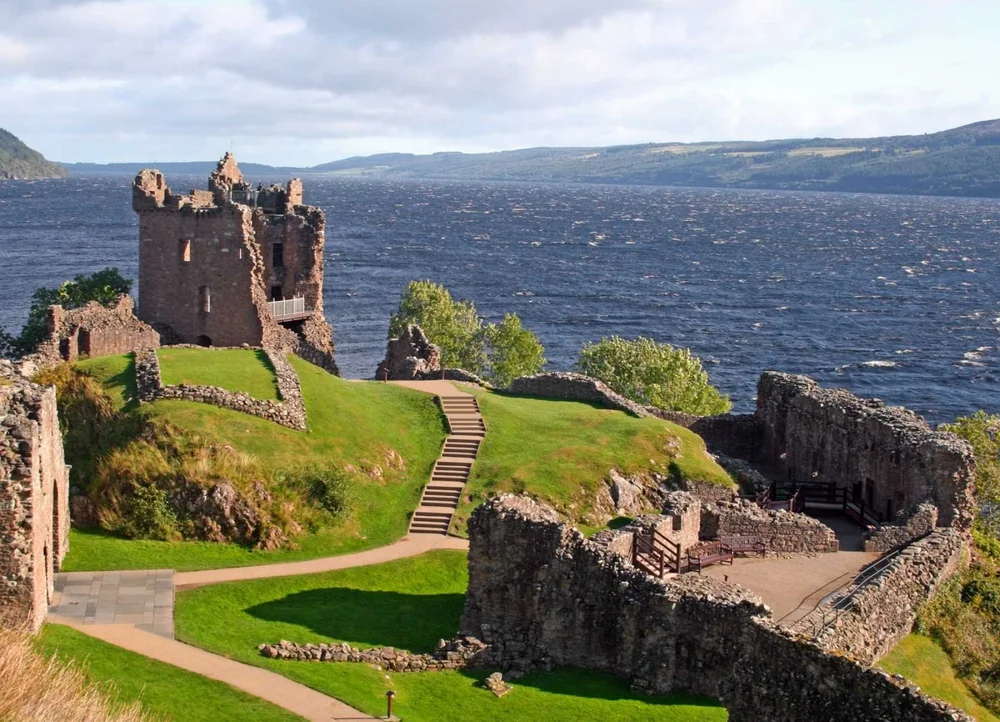
Most sightings are reported from the north-west shore along the A82, especially around Urquhart Castle and Drumnadrochit, and from Fort Augustus at the southern end. Our Loch Ness travel guide covers the villages, cruises and viewpoints around the loch.
The Loch Ness Monster story, from 565 AD to today
The legend has grown in bursts, usually after a new road, a new photograph or a new piece of technology arrived at the loch.
| Year | What happened |
|---|---|
| 565 AD | St Columba is said to have driven off a "water beast" in the River Ness. The story is written down about a century later. |
| 1933 | A new road along the north shore opens up views of the loch. In May, the Inverness Courier reports a sighting, and the "monster" is born. In July, a couple claim to see a creature cross the road in front of their car. |
| 1934 | The "Surgeon's Photograph" appears in the Daily Mail and becomes the most famous image of Nessie. |
| 1960s to 1970s | Organised watches, sonar and underwater cameras arrive. A 1972 underwater photo seems to show a flipper. |
| 1987 | Operation Deepscan: a line of boats sweeps the loch with sonar. It finds some unexplained contacts, but no monster. |
| 1994 | The Surgeon's Photograph is revealed as a hoax built on a toy submarine. |
| 2018 to 2019 | Scientists sample DNA from the water. No reptile DNA, but a lot of eel DNA. |
| 2023 | The biggest search in decades marks the 90th anniversary of the 1933 sighting. |
| 2026 | Sightings keep coming. By late August, 13 had been logged, more than in the whole of 2025. |
St Columba and the first sighting (565 AD)
The earliest story comes from the Life of St Columba, written by the abbot Adomnán about a hundred years after the events it describes. In around 565 AD, the Irish monk Columba was travelling through Pictish country near Inverness when he came across local people burying a man who had been attacked by a "water beast".
Undeterred, Columba asked one of his companions to swim across the water to fetch a boat. (Now, I don't know about you, but if a saint asked me to swim across the water where a monster had just killed someone, I'd be politely suggesting he fetched the boat himself.) The beast rose from the depths and rushed at the swimmer. Columba raised his hand, made the sign of the cross and ordered the beast to go no further and leave the man alone. It turned and fled, and the watching Picts were amazed.
Two details are worth knowing. The story actually takes place in the River Ness, which flows out of the loch to Inverness, not in the loch itself. And stories of saints defeating water monsters were common at the time. But it's the reason Nessie hunters date the legend to 565 AD.
1933: the year Nessie became a monster
For centuries after Columba, Highland folklore was full of water horses and kelpies, but Loch Ness had no particular monster. That changed in 1933, when the new road along the north shore (today's A82) was finished. Trees and rock were cleared, and for the first time drivers had long, open views across the water.
On 2 May 1933, the Inverness Courier reported that a local couple had seen an enormous animal "rolling and plunging" in the loch. The paper called it a monster, and the name stuck. In July, George Spicer and his wife, visitors from London, said a huge long-necked creature had lurched across the road in front of their car and disappeared into the loch. Newspapers across Britain picked up the story, reporters and big-game hunters headed north, and Loch Ness was famous.


The Surgeon's Photograph: the most famous Nessie picture
If you picture the Loch Ness Monster, you're probably picturing this photograph: a small head on a long, curved neck rising out of rippling water. It was published by the Daily Mail on 21 April 1934, credited to Robert Kenneth Wilson, a respected London gynaecologist. Because he didn't want his name attached to it, it became known as the "Surgeon's Photograph".
For sixty years it was the best evidence Nessie believers had. Then, in 1994, researchers revealed that it was a hoax. The "monster" was a toy submarine fitted with a head and neck made of wood putty, only about a foot tall. The plot was led by Marmaduke Wetherell, a big-game hunter who had been ridiculed by the Daily Mail after "Nessie footprints" he found turned out to be made with a hippo-foot umbrella stand. Wilson was simply the trustworthy face who handed the film in.
A toy submarine and some putty fooled the world for sixty years. You have to admire that. But one fake photo doesn't mean every sighting is fake, and I'm sticking with Nessie.
Is the Loch Ness Monster real? What the science says
Plenty of serious people have looked. Here's what the biggest searches found.
- Sonar sweeps: in 1987, Operation Deepscan sent a line of boats down the loch, sweeping it with echo sounders. It picked up a few contacts it couldn't explain, but nothing like a large animal.
- Underwater cameras: in 1972, a team led by Robert Rines photographed what looked like a diamond-shaped flipper. Many believe the image was heavily retouched, and later expeditions never repeated it.
- DNA from the water: in 2018, a team led by Professor Neil Gemmell of the University of Otago collected water samples from across the loch and tested them for DNA from everything living in it. They found no reptile DNA at all, which rules out a surviving plesiosaur. They did find a surprising amount of eel DNA, which leaves the door open to a very big eel.
- The 2023 Quest: for the 90th anniversary of the 1933 sighting, hundreds of volunteers, drones with thermal cameras and an underwater microphone searched the loch over a weekend. They heard some unexplained sounds, but found no monster.
What else could people be seeing?
Most sightings probably have ordinary explanations: boat wakes that keep rolling long after the boat has gone, floating logs, swimming deer, birds, otters or large fish. Loch Ness is so long and narrow that wind and waves play tricks, and on a flat calm day it's very hard to judge the size of something far out on the water.
Then there's our favourite theory. In 2006, palaeontologist Neil Clark suggested that some 1930s sightings could have been circus elephants. Travelling circuses stopped near the loch on their way to Inverness, and the animals were allowed to bathe. A swimming elephant, with only its trunk and the top of its head above water, looks surprisingly like a long neck and a hump.


So is Nessie real?
There's no scientific evidence that a large unknown animal lives in Loch Ness, and a plesiosaur is ruled out: the loch was scoured by glaciers and only filled with water after the last Ice Age, around 10,000 years ago. But people keep seeing things they can't explain, the loch is vast and hard to search, and the Official Loch Ness Monster Sightings Register now lists about 1,180 reports. The only way to decide for yourself is to go and look.
Loch Ness Monster facts
- Nickname: Nessie, from Loch Ness. "Ness" comes from the River Ness.
- What it looks like: reports vary, but most describe a long neck, a small head and one or more humps, often grey or dark brown.
- How big: estimates range wildly, from about 6 metres (20 feet) to more than 15 metres (50 feet).
- First sighting: 565 AD, by St Columba, in the River Ness.
- Most famous photo: the 1934 Surgeon's Photograph, a confirmed hoax.
- Sightings: about 1,180 on the Official Sightings Register, from 565 AD to today, including sightings on the loch's webcams.
- Other Scottish lake monsters: Loch Morar has its own legend, "Morag", and the sightings register records reports from other Scottish lochs too.
How to look for Nessie yourself
Loch Ness is about three to three and a half hours from Edinburgh or Glasgow by road, and 20 to 30 minutes from Inverness. These are the best places to watch the water.
- Urquhart Castle: the ruined castle on its rocky point gives you views right up and down the loch, and more sightings are reported here than anywhere else. Read our Urquhart Castle guide.
- Fort Augustus: the village at the southern tip of the loch, where the Caledonian Canal climbs through a flight of locks. It's the stop on our Loch Ness day tour from Edinburgh, and a good place to take a cruise.
- On a Loch Ness cruise: boats leave from Fort Augustus and from near Drumnadrochit. Some have sonar screens, so you can watch the depths below you.
- Dores Beach: a quiet shingle beach on the south-east shore, with one of the longest views down the loch.
- Drumnadrochit: the village near Urquhart Castle is home to the Loch Ness Centre, which tells the story of the legend and the searches.
Every time I'm out on our Loch Ness day tour, I bring my Nessie-hunting kit: a telescope, a snorkelling mask and a small whisky. The whisky is purely for warmth. It gets cold beside deep, dark water, and it's a well-known fact that whisky is Scotland's most reliable heating system.
My serious advice: go on a calm day, give yourself time, and keep your camera ready. Most sightings last only a few seconds.
See Loch Ness on a guided tour
You don't need a car to go monster hunting. Our small-group tours (never more than 16 travellers) take care of the driving, and your guide will tell you the stories along the way. The Loch Ness Day Tour from Edinburgh stops at Fort Augustus, with time for an optional Loch Ness cruise. The 2-day tour adds a night in the Highlands, our 3-day Skye tour stops at Fort Augustus on the way home, and our 5-day Skye tour spends time around Urquhart Castle.
 Loch Ness Day Trip from EdinburghThe Highlands, Fort Augustus on Loch Ness, Glencoe and Loch Lomond in one guided day.From £96 pp50% depositView tour →
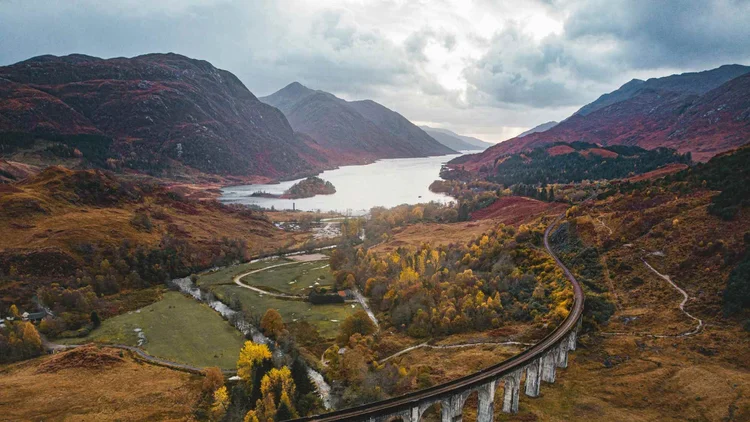 Loch Ness & Highlands 2-Day TourLoch Ness, a night in Fort William, the Glenfinnan Viaduct and Glencoe.From £196 pp25% depositView tour →
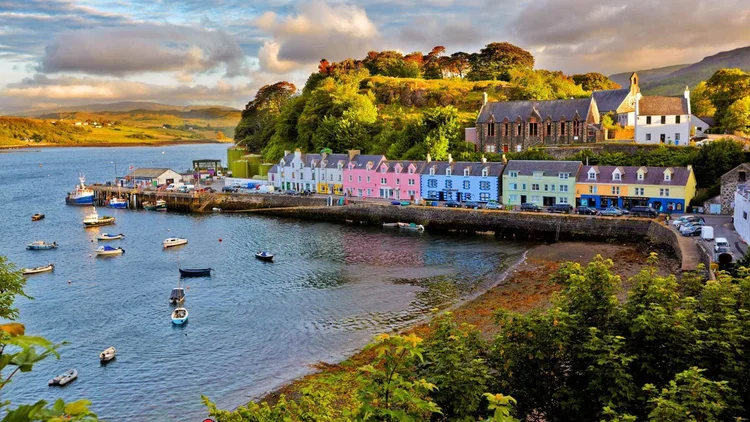 Isle of Skye 3-Day Tour from EdinburghTwo nights on Skye via Glencoe and Loch Ness: the Old Man of Storr, Fairy Glen and Eilean Donan.From £248 pp25% depositView tour →
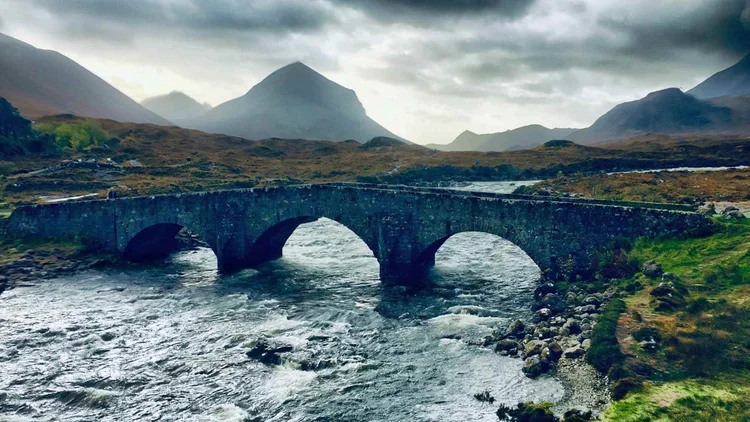 Isle of Skye 5-Day TourKilmartin, Oban, Glencoe, two nights on the Isle of Skye, Loch Ness and Inverness.From £396 pp25% depositView tour →
Loch Ness cruises and castle entry are optional extras, paid on the day. Accommodation isn't included on our multi-day tours, but we're happy to help you book it. You can see every tour that visits the loch on our Loch Ness tours page, or travel your own way on a private Loch Ness day tour.
Loch Ness Monster FAQs
Is the Loch Ness Monster real?
There's no scientific proof that it exists. The most famous photograph was a hoax, and a 2018 DNA survey of the loch found no reptile DNA. But sightings are still reported every year, and many have never been explained.
Where is the Loch Ness Monster?
Nessie is said to live in Loch Ness, in the Scottish Highlands near Inverness. The loch runs for 23 miles through the Great Glen, from near Inverness to Fort Augustus. Most sightings are reported near Urquhart Castle.
When was the Loch Ness Monster first seen?
The earliest story dates from about 565 AD, when St Columba is said to have driven off a water beast in the River Ness. The modern legend began in 1933, when the Inverness Courier reported a sighting and called the creature a monster.
What does the Loch Ness Monster look like?
Most people describe a long neck, a small head and one or more humps on its back, a little like a plesiosaur. Colours and sizes vary a lot between sightings.
Was the famous Loch Ness Monster photo fake?
Yes. The 1934 "Surgeon's Photograph" was revealed in 1994 to be a toy submarine with a model head and neck, made by a team led by Marmaduke Wetherell.
How many Loch Ness Monster sightings have there been?
The Official Loch Ness Monster Sightings Register lists about 1,180 sightings, from 565 AD to 2026. By late August 2026, 13 had been reported that year.
Where is the best place to see the Loch Ness Monster?
Urquhart Castle has the most reported sightings. Fort Augustus, Dores Beach and a cruise on the loch are also good places to watch the water.
Can you visit Loch Ness on a day trip from Edinburgh?
Yes. Loch Ness is about three and a half hours from Edinburgh. Our Loch Ness Day Tour from Edinburgh travels through the Highlands and Glencoe and stops at Fort Augustus, with time for an optional cruise.
More Highland stories
Last updated September 2026 by the Scotland's Wild team.