

Dolphins in Scotland: where & when to see them
You can watch wild dolphins from the Scottish coast without getting on a boat. Start with the Moray Firth or Aberdeen, give yourself time, and let the dolphins come and go.
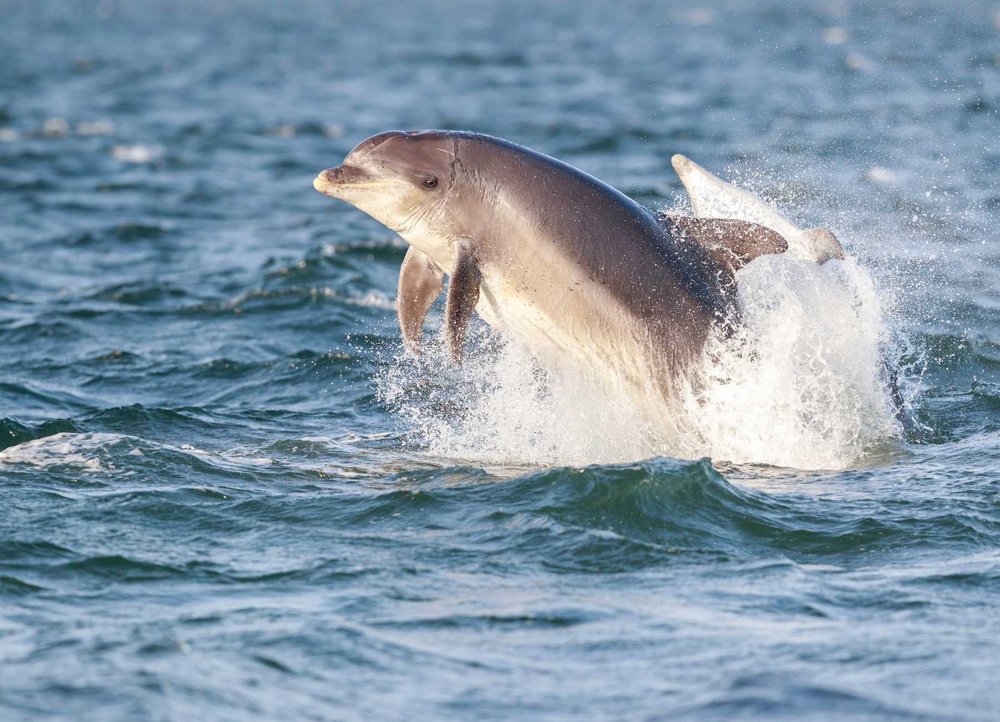
Chanonry Point and Spey Bay on the Moray Firth, and Torry Battery in Aberdeen, are good places to watch dolphins from land. Bottlenose dolphins can be seen around Scotland's east coast throughout the year. Sightings are never guaranteed, and the most useful tide advice depends on the place you choose.
- NEAR INVERNESS
- Chanonry Point
- MORAY COAST
- Spey Bay
- IN ABERDEEN
- Torry Battery
Where to see dolphins in Scotland
You don't need a boat ticket to get started. These coastal viewpoints give you somewhere to settle in and watch the water, with different things to know before you arrive.
Chanonry Point, Black Isle
Head for the shingle beach beyond the lighthouse, between Fortrose and Rosemarkie. Bottlenose dolphins sometimes feed close to the shore here as fish move through the narrow channel.
Plan around the rising tide. Check a local tide table and allow time to wait. The lighthouse and its grounds are private, and there are no toilets or café at the Point.
Spey Bay, Moray
Watch where the River Spey meets the sea, beside WDC's Scottish Dolphin Centre. The centre is a useful starting point for learning about the dolphins, with an exhibition, café and binoculars to borrow.
There isn't a single best tide. WDC records sightings at different times of day and stages of the tide, with more frequent sightings in summer.
Torry Battery, Aberdeen
The viewpoint at Torry Battery looks over Aberdeen harbour entrance. Greyhope Bay's centre is based here, and bottlenose dolphins are seen in these waters throughout the year.
Make time to scan the harbour mouth. Bring binoculars and a warm layer, even on a bright day. Check Greyhope Bay's current visitor information before travelling.
When is the best time to see dolphins?
There isn't one best month or tide for the whole of Scotland. Resident bottlenose dolphins can be seen year-round. The longer days of spring and summer give you more daylight for watching, and WDC reports more frequent summer sightings at Spey Bay.
At Chanonry Point, the local advice is to watch on a rising tide. At Spey Bay, WDC says there is no definitive best time of day or stage of the tide. Advice for one viewpoint shouldn't be applied to every stretch of coast.
Check the forecast as well as the tides. Calm water makes it easier to pick out a fin, while wind and waves can make viewing difficult. Allow a flexible window instead of fitting a quick stop between other plans.
How to watch dolphins responsibly
Watching from land
Shore watching lets you enjoy the dolphins without taking a boat into their space. Look across the water for a curved fin or movement at the surface, then keep watching the same area.
- Bring binoculars and a warm, waterproof layer. Waiting by the sea can feel cold even when the sun is out.
- Stay quiet and keep your distance. Don't enter the water, feed dolphins or try to attract them closer.
- Use established paths and safe viewpoints. Keep clear of steep edges, respect signs and take your litter home.
- Leave time for the place itself. A coastal walk is still a worthwhile part of your day if the dolphins don't appear.
Choosing a boat trip
If you'd like to watch from the water, look for a wildlife operator with WiSe accreditation and ask how they follow the Scottish Marine Wildlife Watching Code.
A responsible skipper lets animals decide how close to come. Boats should not chase, feed, crowd or box dolphins in. Avoid trips that promise a sighting or advertise swimming with wild dolphins.
Before you set off
Check the operator's latest departure information, weather policy and accessibility details. For shore visits, check local access and facilities too; conditions can change.
Which dolphins live around Scotland?
Scotland's waters support several dolphin species. These are three you might read about when planning a visit.
Bottlenose dolphins
Recognisable by their grey body, short beak and curved dorsal fin. These are the dolphins most associated with the Moray Firth and the east-coast viewpoints in this guide.
Common dolphins
Look for a slender body, a longer beak and the distinctive hourglass pattern along the sides. They can be encountered around Scotland's west coast and islands.
Risso's dolphins
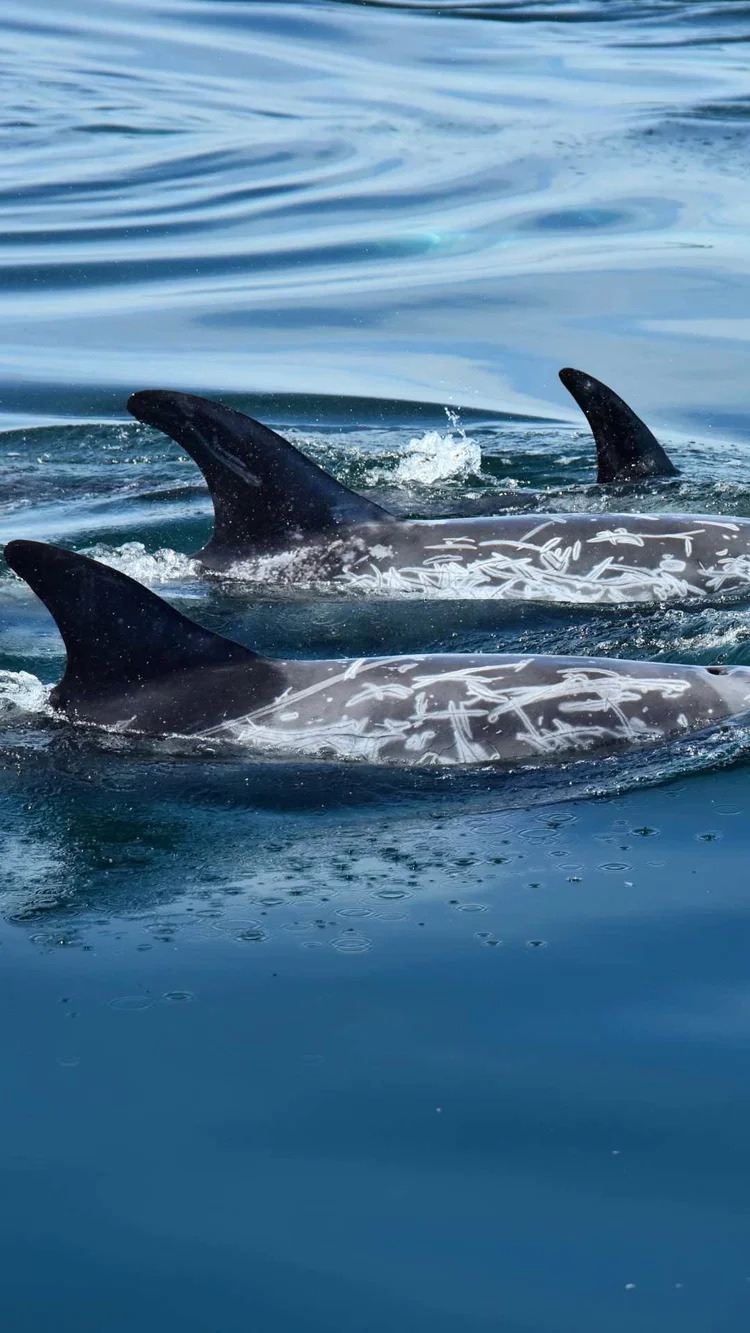
Risso's dolphins have a blunt head and bodies that often become heavily marked with pale scars as they age. Their tall dorsal fins and scar patterns can help with identification.
A brief glimpse isn't always enough to identify a species. Enjoy the encounter without needing to put a name to it.
Make wildlife part of your Scotland trip
If dolphin watching is a priority, tell us while you're planning. A private itinerary gives us room to discuss a suitable coastal stop. Our scheduled island tours offer a different way to enjoy the coast, with wildlife as a possible extra.
Plan a private Scotland tour
Tell us where you're starting, how much time you have and that you'd like to watch dolphins. We can discuss a realistic coastal stop as part of your wider itinerary, alongside the places you want to explore.
The route and any separate boat trip need to be agreed during planning. Dolphin sightings cannot be promised.
Lewis & Harris, with island ferry crossings
Our three-day Lewis & Harris tour includes the ferry between Ullapool and Stornoway. The crossing gives you time to watch the sea for dolphins and seabirds before exploring the islands with your guide.
This is a scheduled island tour with no more than 16 travellers, not a dedicated dolphin-watching trip. Chanonry Point is not an included stop.
Dolphin watching in Scotland: FAQs
Can you see dolphins in Scotland without a boat?
Yes. Chanonry Point and Spey Bay on the Moray Firth, and Torry Battery in Aberdeen, are places to watch from shore. Bring binoculars, allow time and remember that dolphins may not appear.
Where can I see dolphins near Inverness?
Chanonry Point on the Black Isle is a well-known shore-watching spot near Inverness. Check local tide times, aim for a rising tide and follow current visitor advice from Fortrose and Rosemarkie Community Council.
What is the best tide for dolphin watching?
It depends on the location. A rising tide is recommended at Chanonry Point. At Spey Bay, WDC says there is no definitive best stage of the tide or time of day.
Can I see dolphins in Scotland in winter?
Yes. Resident bottlenose dolphins can be seen year-round, although shorter days and rough weather can make watching harder. Check the forecast and current visitor information before travelling.
Are dolphin sightings guaranteed?
No. Dolphins are wild animals and move freely. Even at well-known viewpoints, a visit may pass without a sighting. Plan a day you'll enjoy for the coast and scenery as well.
Does Scotland's Wild run a dolphin-watching tour?
We can discuss a dolphin-watching stop as part of a private Scotland itinerary. Our scheduled Lewis & Harris tour includes ferry crossings where you may see marine wildlife, but it is not a dedicated dolphin-watching tour and does not include Chanonry Point.