

1 Week in Scotland: The Most Amazing Places to Visit
Scotland is one of those places that looks small on a map… but once you actually start travelling through it, you quickly realise just how much there is to see — and how long it really takes to experience it properly.
A lot of itineraries online try to cram everything in, rushing from place to place without really letting you experience the landscapes along the way. But the best trips around Scotland are the ones that feel like a journey.
This 7-day Scotland itinerary takes you from the historic streets of Edinburgh through the Highlands, across the Isle of Skye, over to the Outer Hebrides, and back through some of the country’s most iconic landscapes.
Rather than simply listing places to visit, this route is designed to show you why each stop is worth your time. Check out the video or read on below!

Day 1 – Edinburgh, Loch Lomond, Glencoe & Glenfinnan
Your journey begins in Edinburgh before heading west towards the Highlands.
The first stop is the conservation village of Luss, sitting right on the shores of Loch Lomond — the largest loch in Great Britain by surface area. This area marks the transition between the Lowlands and Highlands and is a perfect introduction to Scotland.
Stone cottages, views across the loch, and a slower pace make it a great place to pause before heading deeper into the Highlands.

As you continue north, the scenery quickly becomes more dramatic as you enter Glencoe.
Glencoe is one of the most iconic places in Scotland, famous not only for its towering mountains and glacial valleys, but also for its tragic history. This was the site of the Glencoe Massacre in 1692, and there is a real atmosphere to the landscape that goes far beyond the scenery alone.
Even the weather adds to the experience here. Rain, mist, snow, and low cloud often make Glencoe feel even more dramatic rather than taking away from it.
Continuing west, you’ll eventually reach the Glenfinnan Viaduct — instantly recognisable from the Harry Potter films. Even without the movie connection, it’s an impressive feat of engineering curving through the Highland landscape with Loch Shiel stretching out behind it.
If you time your visit right, you may even see the Jacobite Steam Train crossing the viaduct.
From here, cross the Skye Bridge and arrive on the Isle of Skye for your first night.
Already, it feels like a completely different world.
Want to experience this route without worrying about driving or planning? Check out our guided Scotland tours at Experience Scotland’s Wild.
Day 2 – Exploring the Isle of Skye
Day two focuses on the west side of Skye.
First up are the Fairy Pools — crystal-clear waterfalls and pools flowing down from the Cuillin Mountains. On calm days, the water reflects the surrounding peaks and creates one of the most beautiful landscapes on the island.
The bright blue water almost feels unreal.

If you’re brave enough, it’s also one of the best cold-water swimming spots in Scotland.
Later in the day, head to Dunvegan Castle — the oldest continuously inhabited castle in Scotland and ancestral home of Clan MacLeod for over 800 years.
It adds another layer to the journey: history, heritage, and a reminder that people have lived among these landscapes for centuries.
Finish the day in Portree, Skye’s colourful harbour town. With its relaxed atmosphere, waterfront views, and excellent restaurants, it’s the perfect place to slow down for the evening.
Day 3 – Skye’s Most Dramatic Landscapes
Day three takes you through some of Skye’s most famous scenery.
Start with the Old Man of Storr — one of the most recognisable landmarks in Scotland. This towering rock pinnacle was formed by ancient landslides and offers incredible views over the island and surrounding coastline.
It’s a relatively short hike, but the reward is huge.
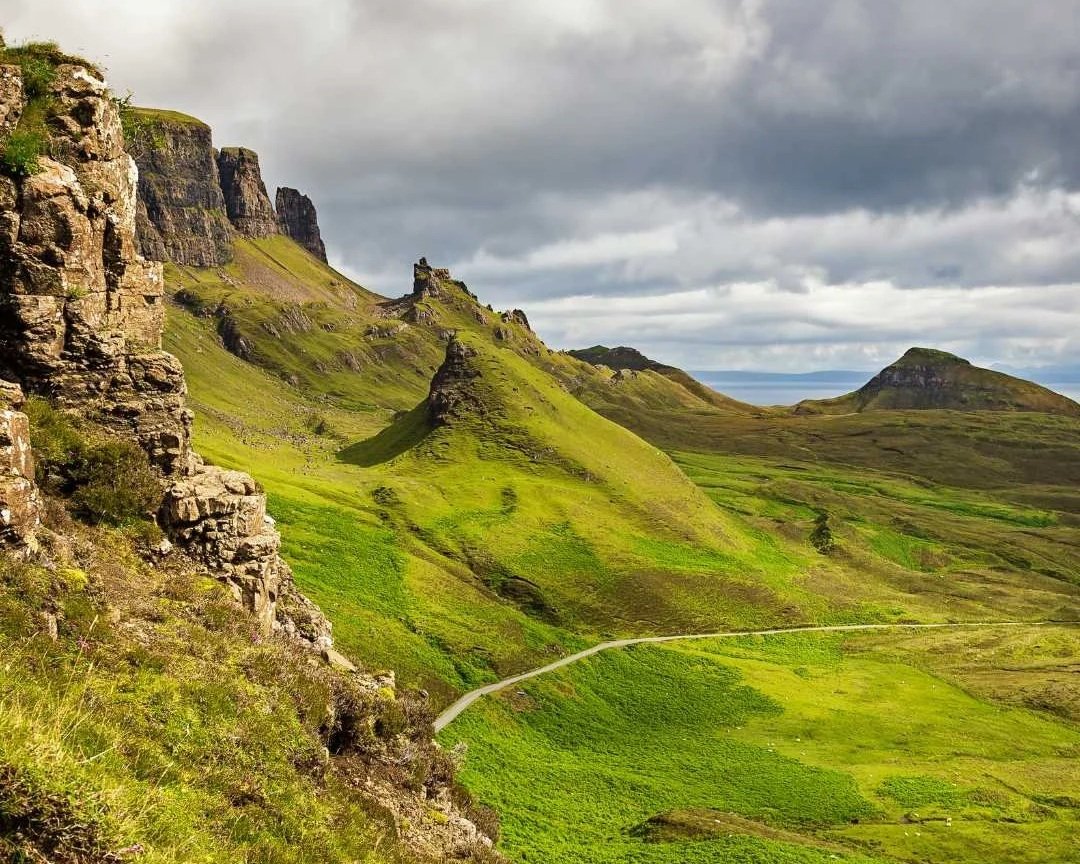
A short drive away lies Lealt Falls, where water crashes dramatically into a coastal gorge before reaching the sea below.
Then comes the Quiraing — one of the most surreal landscapes in Scotland. Shaped by a massive landslip, the area is filled with cliffs, plateaus, and unusual rock formations that almost feel otherworldly.
The drive through the Quiraing is one of the most scenic in Scotland, with viewpoints appearing almost constantly along the road.
Nearby, the Fairy Glen offers something completely different. Smaller in scale, but magical in appearance, it feels like something straight out of folklore.
Later, leave Skye behind and take the ferry over to the Isle of Harris.
The crossing itself is part of the experience, especially on clear days when the views back towards Skye are spectacular.
This is where the trip begins to feel far more remote.
Day 4 – Harris & Lewis: Scotland’s Wild Outer Hebrides
The Outer Hebrides feel completely different from mainland Scotland.
The landscapes are wide open, windswept, and constantly shaped by the Atlantic Ocean.

Heading north, you’ll eventually reach the Butt of Lewis — one of the windiest places in the UK. The coastline here feels raw and exposed, with huge cliffs, crashing waves, and a real sense that you’re standing at the edge of the world.
From there, explore historical sites like the Arnol Blackhouse and the Gearrannan Blackhouse Village.
Stepping inside these preserved homes gives you a real sense of how people adapted to life in these harsh island conditions for centuries.
Later, visit Dun Carloway Broch — a remarkably well-preserved Iron Age structure that has stood for around 2,000 years.
The fact it still survives today is pretty incredible when you see it up close.
Finish the day at the Callanish Standing Stones — older than Stonehenge and one of the most atmospheric ancient sites in Scotland.
Standing here, surrounded by the landscape of Lewis, you really feel the depth of history in these islands.
Day 5 – Returning to the Mainland: Loch Ness & Highland Landscapes
From Stornoway, take the ferry back to the mainland at Ullapool.
From there, continue south to Corrieshalloch Gorge — a dramatic Victorian-era viewpoint overlooking a deep gorge and waterfall.
The suspension bridge gives you an incredible perspective looking directly down into the gorge below.

Later, continue on towards Loch Ness.
Here you can take a cruise across the loch and visit the ruins of Urquhart Castle sitting right on the shoreline.
Loch Ness is incredibly deep — deeper than the North Sea in places — which is partly why the legend of Nessie has survived for so long.
The scenery around the loch is every bit as impressive as the stories.
You can also stop at the Singleton Distillery for a whisky tasting and a look into Scotland’s whisky-making traditions.
Finish the evening in Inverness, often referred to as the capital of the Highlands.
Day 6 – Inverness & A Slower Day in the Highlands
After several busy days travelling through the Highlands and islands, day six slows the pace down slightly.
Spend time exploring Inverness itself, walking along the River Ness, visiting local cafés, or simply relaxing before the final stretch of the trip.
Inverness has a very different atmosphere from the west coast and the islands. It’s smaller and calmer than Scotland’s major cities, but still feels full of Highland character.
It’s also a great base for exploring the surrounding area.

Day 7 – Culloden, The Cairngorms & The Hermitage
The final day is packed with variety.
Start at Culloden Battlefield — the site of the last battle fought on British soil in 1746.
It’s one of the most historically significant places in Scotland, and the visitor centre does an excellent job of explaining both the battle itself and its lasting impact on Highland culture.
From there, head south into the Cairngorms National Park — the largest national park in the UK.
Around Aviemore, the landscape changes once again. Forests, wider glens, and mountain scenery create a completely different feel compared to the rugged west coast.
On the journey south, stop at the House of Bruar, often nicknamed the “Harrods of the Highlands,” for food, gifts, and souvenirs.
Finally, visit The Hermitage — a beautiful woodland walk filled with towering Douglas firs and waterfalls.
Some of the trees here are among the tallest in the UK, adding to the atmosphere of the forest.
From there, return to Edinburgh and complete the loop around Scotland.
Why This 1 Week Scotland Itinerary Works
What makes this route special is the sheer variety you experience in just seven days.
You’ll travel through Highland glens, island landscapes, ancient historical sites, coastal villages, forests, castles, and some of the most dramatic scenery anywhere in Europe.
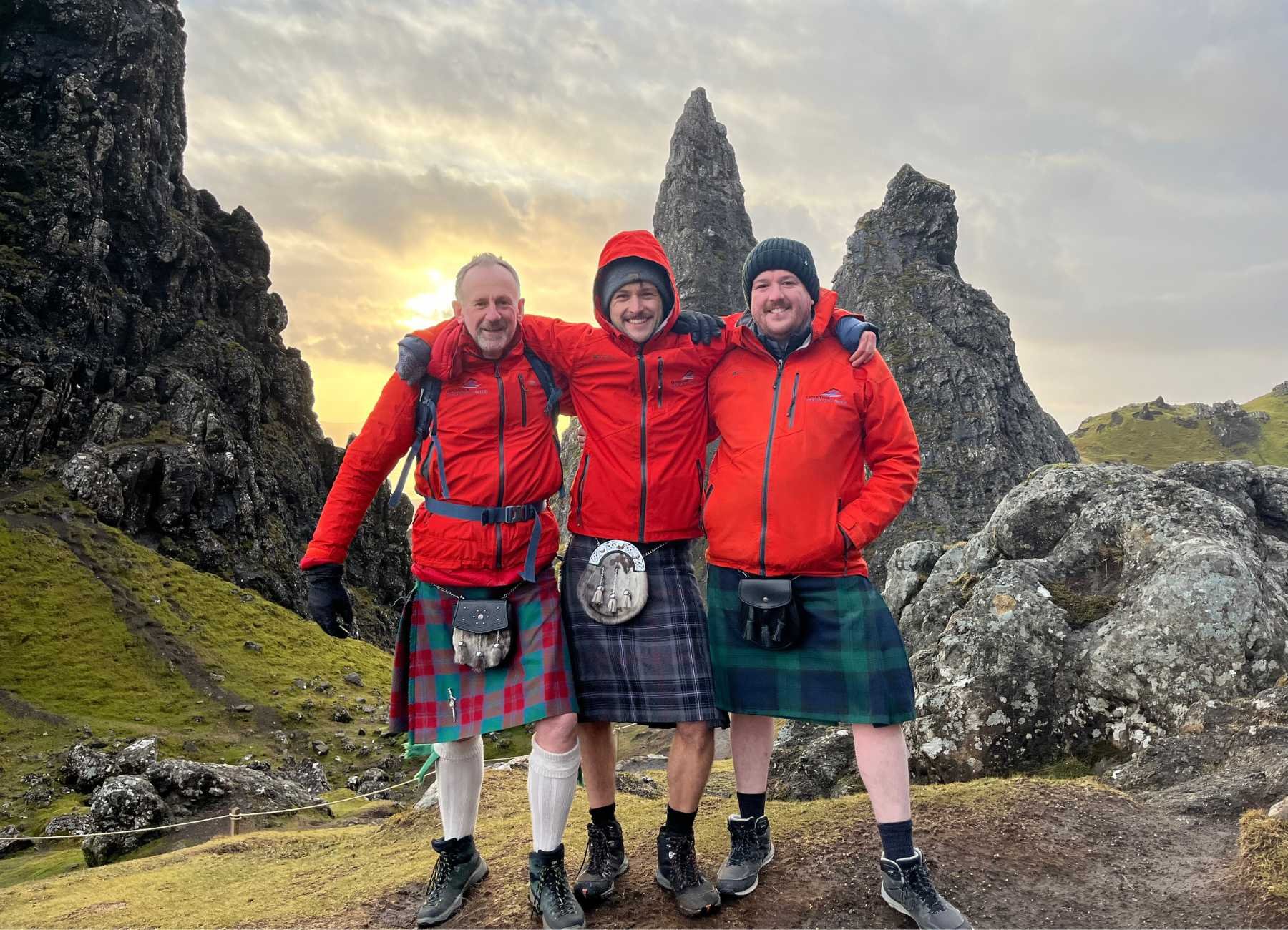
But more importantly, the route is paced in a way that actually lets you enjoy the experience rather than simply rushing through a checklist of locations.
If this feels like the kind of Scotland trip you’d love to do, this is also a route we run as a guided tour at Experience Scotland’s Wild.
With small groups, storytelling expert guides, and carefully planned itineraries, we help visitors experience Scotland properly — beyond just the typical tourist stops.
And whether you join a tour or plan your own adventure, hopefully, this guide gives you a better idea of how to experience Scotland as a journey, not just a checklist.